Tag: Shut Down Line 5

Live webinar: A Deep Dive on Line 5

WEBINAR: Deep Dive on Line 5

Enbridge’s Line 5 pipeline and proposed tunnel in the Straits of Mackinac threaten the Great Lakes, while primarily serving Canada. In July, the Tribal and environmental coalition earned a significant victory when the Michigan Supreme Court vacated a required state permit for the tunnel project. Meanwhile, additional state and federal permit processes continue to play out, as the Line 5 issue shapes the important November election.

Presented by Flow Water Advocates and Oil & Water Don’t Mix on August 20, 2026, this webinar recording unpacks what it all means, what happens next, and how you can help get oil out of the Great Lakes.

Watch the recording:

Our expert panel includes:

  • Riyaz Kanji, founding member and Directing Attorney of Kanji & Katzen – representing the Bad River Band of Lake Superior Chippewa and Flow Water Advocates
  • Debbie Chizewer, Managing Attorney, EarthJustice 
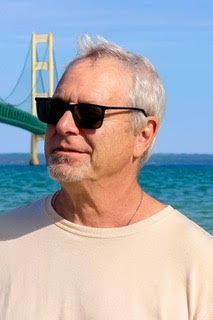
  • David Holtz, Oil & Water Don’t Mix Campaign Coordinator and member of the Sierra Club Board of Directors

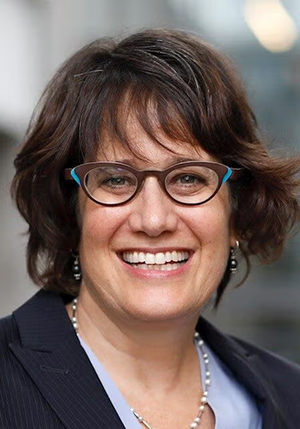
Hosted and moderated by Flow executive director Liz Kirkwood.

About the panelists

Riyaz Kanji, Founding Member and Directing Attorney, Kanji & Katzen

Riyaz Kanji is a founding member of Kanji & Katzen, PLLC, a firm whose mission is to advance Tribal sovereignty. A graduate of Harvard College and the Yale Law School, Riyaz served as a law clerk to the late Honorable Betty Fletcher of the United States Court of Appeals for the Ninth Circuit and Justice David Souter of the United States Supreme Court. He is an advisor to and vocal cheerleader for the Tribal Supreme Court Project. Riyaz represents Tribes at all levels of the federal court system, and was part of the team that argued and won the decision in McGirt v. Oklahoma vindicating the continued existence of the Muscogee Creek Reservation. Riyaz served as lead attorney for Flow Water Advocates in its recent successful appeal to the Michigan Supreme Court, FLOW v. MPSC, which vacated the Line 5 tunnel permit issued by the Michigan Public Service Commission.

Debbie Chizewer, Managing Attorney, EarthJustice

As the managing attorney for Earthjustice’s Chicago office, Debbie Chizewer has built a Midwest team and a docket of cases across three program areas — climate and energy, healthy communities, and wild lands and wildlife. This team’s work includes representation of Tribal Nations in the fight against the risky Line 5 oil pipeline and advocacy on behalf of Black, low-income communities facing disproportionate environmental harms from air and water pollution. Throughout her career, Debbie has advocated for environmental protection across many issues — fighting for environmental justice in the Midwest at Northwestern Law’s environmental law clinic, promoting Great Lakes health at the Alliance for the Great Lakes, and protecting wildlife and public lands in the Rockies for the National Wildlife Federation. Debbie graduated from Princeton University and Boston University School of Law. After graduation from law school, she clerked in the U.S. District Court in the District of Delaware.

David Holtz, Coalition Coordinator for Oil & Water Don't Mix and Member of the Sierra Club Board of Directors

David’s passion for environmental protection, social justice and belief in people-powered political change led him to become a Sierra Club volunteer and in 2013 join the campaign to shut down Enbridge’s dangerous Line 5 oil pipeline in the Straits of Mackinac. He currently serves as coalition coordinator for Oil & Water Don’t Mix. David is a member of the national Sierra Club Board of Directors where he serves on the board’s Executive Committee. For more than a decade David worked as a newspaper reporter and is a former senior aide to a Member of Congress from Michigan. David was a founding board member of the nonprofit communications hub, Progress Michigan, and served as its executive director from 2010 to 2013 and is the former Michigan Director for Clean Water Action. He is a U.S. Marine Corps Vietnam veteran.

An abridged and ongoing list: Things Enbridge Takes Credit For

Published May 24, 2024; updated November 7, 2025

Do you enjoy celebrating the holidays with your friends and family? How about checking items off your bucket list, or watching the Super Bowl? Are cookies, chips, and pizza some of your guilty pleasures?

Believe it or not, you can thank your friendly neighborhood pipeline company for all of these things and more! (Unless your neighborhood is Marshall, MI.)

We don’t know if this is absolutely bonkers PR, or just some good old-fashioned Search Engine Optimization tactics. But either way, you almost have to admire the chutzpah!

An ongoing list of things Enbridge takes credit for:


Treating diabetes

Achieving your lifelong dreams

4th of July Celebrations

Chocolate chip cookies

Thanksgiving dinner and parade balloons

Not dying of a heart attack

4th of July Celebrations (again)

Fudge

Back to School shopping

Potato chips

Michigan fall tourism

Thanksgiving dinner and visiting your family

The Super Bowl and Super Bowl parties

Not dying from diabetes

Family fun

County fairs and festivals

Detroit-style pizza and football

Eyeglasses, kayaks, deodorant, etc.

Christmas presents

Christmas decorations


But there are some important things Enbridge doesn’t like to take credit for, like being penalized six times by the United States for failing to live up to its commitments on safety; violating the terms of its pipeline easement with Michigan; or operating a pipeline in the open waters of the Straits of Mackinac that is uniquely vulnerable to anchor strikes.

Enbridge Line 5 webinar: What every Michigander needs to know

Facing competition, declining fossil fuel demand, and challenges building new pipelines in Canada, Enbridge is working overtime to convince Michiganders that we’re dependent on Line 5, but that’s not true.

On July 22, join Flow Water Advocates and Oil & Water Don’t Mix for a special live webinar, as our panel of experts and advocates discuss recent developments in the Line 5 litigation, why the tunnel isn’t good for Michigan, and how you can get involved.

Did you know that…

  • Enbridge was responsible for the devastating 1.2 million gallon oil spill in Marshall, Michigan — one of the worst in U.S. history.
  • 80-90% of the crude oil carried by Line 5 goes from Canada, to Canada.
  • The State of Michigan is the legal trustee of the Straits, and has the power and duty to protect them for the benefit of Michiganders.
  • Enbridge still needs permits from the U.S. Army Corps of Engineers and the Michigan Dept. of Environment, Great Lakes, and Energy (EGLE) to build the tunnel.

Our expert panel includes:

  • Riyaz Kanji, founding member and Directing Attorney of Kanji & Katzen – representing the Bad River Band of Lake Superior Chippewa
  • Carrie La Seur, Legal Director, Flow Water Advocates 
  • Skip Pruss, Senior Legal Advisor, Flow Water Advocates
  • Beth Wallace, Climate and Energy Director, National Wildlife Federation and Co-Director of the Great Lakes Business Network

Hosted and moderated by Flow staff attorney Kacey Cook.

This online webinar is free, and supported in part by the Mackinac Island Community Foundation’s Natural Resources and Preservation Fund and the Straits Area Community Foundation. 

About the panelists

Riyaz Kanji, Founding Member and Directing Attorney, Kanji & Katzen​

Riyaz Kanji is a founding member of Kanji & Katzen, PLLC, a firm whose mission is to advance Tribal sovereignty. A graduate of Harvard College and the Yale Law School, Riyaz served as a law clerk to the late Honorable Betty Fletcher of the United States Court of Appeals for the Ninth Circuit and Justice David Souter of the United States Supreme Court. He is an advisor to and vocal cheerleader for the Tribal Supreme Court Project. Riyaz represents Tribes at all levels of the federal court system, and was part of the team that argued and won the decision in McGirt v. Oklahoma vindicating the continued existence of the Muscogee Creek Reservation.

As Flow’s Legal Director, Carrie develops and implements legal and policy strategies to maximize protection of public trust resources and uses. A graduate of Yale Law School, Carrie recently relocated to northern Michigan from Montana, where she practiced civil litigation, specializing in environmental and climate issues. From 2006-2012 served as Executive Director of Plains Justice, a legal nonprofit she co-founded, litigating against new fossil fuel infrastructure.

Skip Pruss is an energy expert with decades of experience in both the public and private sector. He is a former cabinet member and director of the Michigan Department of Energy, Labor, and Economic Growth, as well as the former chief energy officer for the State of Michigan, under former Gov. Jennifer Granholm, where he was responsible for designing and implementing Michigan’s clean energy economy diversification efforts.

Earlier in his career, Skip served as Deputy Director of the Michigan Department of Environmental Quality. Skip also is a co-founder of 5 Lakes Energy LLC, a clean energy technology consultancy.

Bio coming soon!

Risky, costly, and ill-advised: New report and webinar analyzes the Enbridge Line 5 tunnel project

WATCH THE WEBINAR RECORDING


Enbridge’s plan to bore a tunnel between Lake Michigan and Lake Huron to replace an underwater segment of Line 5 is costly and ill-advised, according to a new report from the Institute for Energy Economics and Financial Analysis (IEEFA). The report shows that the aging pipeline is servicing a shrinking market and is facing additional challenges that will make it costly to maintain operations. The report also shows that the pipeline tunnel will likely be more costly than project proponents have disclosed publicly to date. IEEFA’s analysis concludes that Enbridge should question whether it makes sense to keep sinking money into an old pipeline when markets for its products are on a declining trajectory. Download the report.

Live Webinar: January 15 at 12:00pm EST

FLOW will host a free, live webinar with IEEFA report co-authors Suzanne Mattei, Energy Policy Analyst; and David Schlissel, Director of Resource Planning Analysis. We’ll talk about the report’s findings and answer your questions. The webinar will be moderated by FLOW Legal Director Carrie La Seur.

About IEEFA

The Institute for Energy Economics and Financial Analysis (IEEFA) examines issues related to energy markets, trends, and policies. The Institute’s mission is to accelerate the transition to a diverse, sustainable and profitable energy economy. IEEFA’s nonpartisan and evidence-based approach provides solid ground on which to base sound investment and policy decisions and to challenge misinformation.

Webinar Guest Speakers

Suzanne Mattei is an attorney with over 30 years of experience in public interest law and policy. She has analyzed the Federal Energy Regulatory Commission’s policies related to interstate pipeline approval. She has also conducted research on blue hydrogen, petrochemical projects, gas flaring and fossil fuel extraction on public lands.

Suzanne is a former regional director for the New York State Department of Environmental Conservation, where she supervised permitting and enforcement in New York City, with an area population of about 8 million.

Previously, in City government oversight positions, her analysis helped spur the City to abandon a risky plan to sell its drinking water supply system to a state-run authority and to reject a costly, ill-advised plan to build garbage incinerators. Her investigation on behalf of Sierra Club exposed the federal government’s failure to curb exposure to pollution from the 9/11 World Trade Center disaster. Her testimony to Congress helped lead to a law that aids 9/11 responders and survivors.

Suzanne helped to establish free legal assistance and secure federal aid for bereaved families after the 9/11 disaster, and for Ground Zero workers suffering from negative health impacts.

She has a juris doctor degree from Yale University and B.A. from Washington State University. She is admitted to practice law in New York.

David Schlissel is an IEEFA analyst with 50 years of experience as an economic and technical consultant on energy and environmental issues.

He has testified as an expert witness before regulatory commissions in more than 35 states and before the U.S. Federal Energy Regulatory Commission and the Nuclear Regulatory Commission.

Schlissel’s work has included researching, writing and testifying about the U.S. nuclear industry and the cost overruns, construction delays and other challenges associated with many nuclear projects. He has engineering degrees from MIT and Stanford University as well as a Juris Doctor from Stanford Law School. He also has studied nuclear engineering at MIT in a non-degree program.

WEBINAR // Enbridge Line 5: Trouble Under the Surface

Enbridge’s Line 5 pipeline is over 71 years old and remains a threat to the waters and people of the Great Lakes region.

On August 20, join FLOW and Oil & Water Don’t Mix for a special live webinar, and learn from a panel of experts and advocates about recent developments in the legal fight to shut down Line 5 and bring an end to Enbridge’s continuous trespass on state and sovereign indigenous lands. We’ll also talk about how coalition partners are working together at the state, local, and federal level, and how you can join the campaign to shut down Line 5, and take audience questions.

Our expert panel includes:

  • Riyaz Kanji, founding member and Directing Attorney of Kanji & Katzen – representing the Bad River Band
  • Mahyar Sorour, Deputy Legislative Director for Beyond Dirty Fuels at the Sierra Club
  • Sean McBrearty, Campaign Coordinator, Oil & Water Don’t Mix and Michigan State Director at Clean Water Action

Hosted by FLOW Executive Director Liz Kirkwood, and moderated by Senior Legal Advisor Skip Pruss.

This online webinar is free, and supported in part by a grant award from the Mackinac Island Community Foundation’s Natural Resources and Preservation Fund. Register online at www.ForLoveOfWater.org/pipeline.

ABOUT THE SPEAKERS

Riyaz Kanji, Founding Member and Directing Attorney, Kanji & Katzen​

Riyaz Kanji is a founding member of Kanji & Katzen, PLLC, a firm whose mission is to advance Tribal sovereignty. A graduate of Harvard College and the Yale Law School, Riyaz served as a law clerk to the late Honorable Betty Fletcher of the United States Court of Appeals for the Ninth Circuit and Justice David Souter of the United States Supreme Court. He is an advisor to and vocal cheerleader for the Tribal Supreme Court Project. Riyaz represents Tribes at all levels of the federal court system, and was part of the team that argued and won the decision in McGirt v. Oklahoma vindicating the continued existence of the Muscogee Creek Reservation.

Sean McBrearty is the Campaign Coordinator for the Oil & Water Don’t Mix campaign and Legislative and Policy Director at Michigan Clean Water Action, where he works on water infrastructure, oil and gas, and drinking water issues. Mr. McBrearty has served as a leader in the campaign to decommission Enbridge’s Line 5 pipeline for the past six years. He learned the importance of protecting drinking water and our environment from a young age, growing up in a community devastated by perennial droughts and poor water and air quality in California’s Central Valley

Mahyar is a Director on the Sierra Club’s Federal Policy Team based in Washington, D.C. She manages the development and implementation of legislative and administrative advocacy efforts with the Sierra Club’s Beyond Dirty Fuels Campaign. She has a background in environmental justice, policy, and grassroots organizing; working on issues related to air and water quality; energy policy; and legislative and advocacy training. 

The event is brought to you by:

FLOW to Army Corps: Threat to Great Lakes and Lack of Public Need Should Sink Proposed Oil Tunnel

Editor’s note: Learn more about FLOW’s efforts to shut down Line 5 and stop the proposed oil pipeline tunnel on FLOW’s Line 5 program page and new Line 5 fact sheet.


By Zach Welcker, FLOW Legal Director

For Love of Water (“FLOW”) submitted legal and technical comments before today’s deadline in response to the U.S. Army Corps of Engineers’ Notice of Intent to Prepare a Draft Environmental Impact Statement for Enbridge’s proposal to bore and blast a 20-foot-in-diameter tunnel under the Straits of Mackinac, just west of the Mackinac Bridge, to house a new Line 5 oil pipeline for another 99 years.

Zack Welcker, FLOW Legal Director

The public can still comment on the proposed oil tunnel in the Great Lakes by 11:59 p.m. EDT today (Oct. 14, 2022) on the Army Corps’ project website.

The public can still comment on the proposed oil tunnel in the Great Lakes by 11:59 p.m. EDT today (Oct. 14, 2022) on the Army Corps’ project website. The Oil & Water Don’t Mix campaign, of which FLOW is a founding steering committee member, also is collecting and forwarding comments to the Army Corps using an email template that suggests key points to make. FLOW’s tunnel comment also provides critical elements to convey.

FLOW urged the Army Corps to broaden the scope of its analysis to ensure that all regional alternatives are fully considered in an effort to meet regional fossil-fuel energy demands, which are forecasted to dwindle in the ongoing transition to clean energy, while maximizing protection of the Great Lakes and combating climate change.

Enbridge’s proposed Line 5 oil tunnel is not a viable alternative given the forecasted dwindling demand for fossil fuels and the need to maximize protection of the Great Lakes and combat climate change.

In FLOW’s view, Enbridge’s proposed Line 5 oil tunnel is not a viable alternative to meet these regional objectives when viewed in light of all relevant facts. FLOW anticipates that the manifold risks of the tunnel proposal will continue to grow as Enbridge begins to fill data gaps related to geologic conditions, construction challenges, and worker safety.

FLOW Raises Concerns about Risk to Great Lakes, Lack of Public Need, and Information Gaps

FLOW’s comments to the Army Corps include an emphasis on the:

  • Line 5 Pipeline Risk—FLOW opposes tethering the shutdown of the existing dual Line 5 pipelines to a tunnel project that will not resolve underlying the environmental and cultural concerns about siting a major oil pipeline in the middle of America’s greatest surface freshwater resource.

    enbridges-line-5-under-the-straits-of-mackinac-4f9997139d321d60

    A diver points to broken straps along an encrusted segment of Line 5 on the bottom of the Straits of Mackinac.

  • Lack of Information—The public is deeply concerned about the risk of a catastrophic tunnel explosion, the economic feasibility and environmental impacts of constructing the tunnel, and the long-term climate impacts of the tunnel proposal. The public needs more information than Enbridge has provided to understand the risks and benefits.

The public is deeply concerned about the risk of a catastrophic tunnel explosion, the economic feasibility and environmental impacts of constructing the tunnel, and the long-term climate impacts of the tunnel proposal.

  • Lack of Public Need—As Enbridge implicitly concedes, there is no long-term public need for the proposed tunnel from an energy standpoint, and it would undermine federal greenhouse-gas reduction policies. Enbridge’s own expert has determined that a Line 5 shutdown would have a de minimis impact on fuel prices.
  • Overly Narrow Focus—Regionalizing the Purpose and Need Statement in the Army Corps study is warranted because Enbridge’s 645-mile Line 5 pipeline is almost 70 years old and past the end of its projected operational life. As Line 5 would need a systemic makeover to keep operating for another 99 years, Enbridge’s proposed tunnel should not be segmented and evaluated in isolation from the entire operation.

Line 5 shown in red runs from Superior, Wisc., to Sarnia, Ont., as part of Enbridge’s larger pipeline network in yellow running from the Alberta, Canada, tar sands to Montreal.

Line 5 pipeline is almost 70 years old and past the end of its projected operational life.

  • Strong Public Interest in Great Lakes Protection—The Army Corps’ Purpose and Need Statement in the Notice of Intent is also deficient for lack of recognition of the public interest in protecting the Great Lakes in the face of global water shortages, chronic drought in the United States, and other costly impacts from climate change. Protection of the largest and most valuable surface freshwater system in the world is an economic and environmental imperative. The Great Lakes contain 84% of North America’s fresh surface water and are the cultural backbone for eight states, two provinces, and multiple tribes and First Nations.

FLOW cited lack of recognition of the public interest in protecting the Great Lakes in the face of global water shortages, chronic drought in the United States, and other costly impacts from climate change.

Army Corps Should Consider a Range of Reasonable Alternatives

In order to meet the objectives of a Purpose and Need Statement that focuses on the connection between Enbridge’s Superior, Wisconsin, and Sarnia, Ontario, terminals and gives primacy to the public’s interest in maximizing protection of the Great Lakes, the Army Corps should, at a minimum, consider the following alternatives:

Tar sand oil production, Fort McMurray, Alberta, Canada. Photo by Environmental Defence Canada.

  1. An alternative to connect Enbridge’s Superior and Sarnia terminals without crossing the Great Lakes.
  2. An alternative to use existing capacity in other pipelines and, if necessary, other transportations solutions–such as rail and truck transport of natural gas liquids–in lieu of building new pipeline infrastructure.
  3. A tunnel alternative that fully eliminates the risk of oil intrusion into the Straits of Mackinac in the event of an explosion or similar event.
  4. A “no action” alternative.

Protection of the largest and most valuable surface freshwater system in the world is an economic and environmental imperative. The Great Lakes contain 84% of North America’s fresh surface water and are the cultural backbone for eight states, two provinces, and multiple tribes and First Nations.

The Army Corps’ analysis of “energy need” should result in a determination that Enbridge’s proposed tunnel is contrary to the public interest. The confluence of future demand-side constraints, including the electrification of transportation, disinvestment in Albertan oil production, North American and global prohibitions on the sale and use of internal combustion engine vehicles, and governmental efforts aimed at reducing greenhouse gas emissions are accelerating the transition to a global clean energy economy. These forces driving change are being embraced by public and private interests and represent future trends that will bring measurable economic, environmental, and social benefits. The confluence of these market forces militates against future large-scale investment in fossil fuel infrastructure.


Editor’s note: Learn more about FLOW’s efforts to shut down Line 5 and stop the proposed oil pipeline tunnel on FLOW’s Line 5 program page and new Line 5 fact sheet.

Last Call: Army Corps on Oct. 6 to Hold Final ‘Scoping Meeting’ on Proposed Oil Tunnel in Great Lakes

Editor’s note: Learn more about FLOW’s efforts to shut down Line 5 and stop the proposed oil pipeline tunnel on FLOW’s Line 5 program page and new Line 5 fact sheet.


The public will have a last chance on October 6 to comment orally to the leadership and staff of the U.S. Army Corps of Engineers, Detroit District, on the agency’s plans for a study of an oil tunnel proposed under the Great Lakes.

The Army Corps will hold an online meeting from 1-4 p.m. on Thursday to help set the scope of the agency’s environmental impact statement study of a proposal by Enbridge, Inc., of Canada, to build an oil tunnel under the Straits of Mackinac. The tunnel would house Enbridge’s Line 5 oil pipeline, which has leaked dozens of times across Michigan and Wisconsin while carrying oil since 1953 from western Canada primarily to refineries in Sarnia, Ontario. The Army Corps study is expected to continue through at least 2023.

In addition to the Oct. 6 meeting, the public can comment on the study of the tunnel proposal by October 14 by mail or the Army Corps project website. The Oil & Water Don’t Mix campaign, of which FLOW is a founding steering committee member, also is collecting and forwarding comments to the Army Corps using an email template that suggests key points to make. FLOW’s preliminary tunnel comment also provides critical elements to convey.

Many Troubling Aspects of the Tunnel Proposal

Enbridge wants to bore and blast a 20-foot-in-diameter tunnel under the Straits of Mackinac, just west of the Mackinac Bridge, to house a new Line 5 pipeline. The Canadian company’s stated goal is to continue for another 99 years carrying up to 23 million gallons of oil and natural gas liquids a day through Line 5 and State of Michigan public trust bottomlands where Lake Michigan meets Lake Huron, just west of the Mackinac Bridge.

FLOW and our partners have identified critical deficiencies in the project’s construction permit application, its legal authorization, and the review by State of Michigan environmental agencies of expected impacts to wetlands, bottomlands, and surface water, including from the daily discharge of millions of gallons of wastewater during construction. FLOW and our allies have expressed continuing concerns about the impact to the Great Lakes and lack of public necessity for the project, which would worsen climate change by adding greenhouse gas emissions each year equivalent to almost seven new coal-fired power plants or nearly 6 million new cars to the road, according to experts.

Enbridge also lacks adequate liability insurance, according to a report released by the Attorney General Dana Nessel’s office revealing that Enbridge’s subsidiaries, not its parent company, hold Line 5’s 1953 easement and signed the proposed tunnel agreement; the assets of the subsidiaries’ parent Enbridge are inadequate to cover the costs and economic damages in the event of a moderate spill.

At Prior Army Corps Hearing, a Strong Majority Rejected the Proposed Oil Tunnel

The Army Corps already has held a Sept. 1 online comment session to help scope its tunnel study and a Sept. 8 in-person hearing in St. Ignace, where more than 4 out of 5 people who spoke, from among a crowd of hundreds, said that an oil pipeline tunnel proposed under the Great Lakes was a dangerous idea that would rob future generations by threatening the most precious thing on earth—fresh water—and worsening the climate crisis. 

Hundreds of people attend a public comment session held by the U.S. Army Corps of Engineers on the oil pipeline tunnel proposed by Enbridge under the Straits of Mackinac, on Sept. 8, 2022, at Little Bear East Arena in St. Ignace, Michigan. Photo by Kelly Thayer.

Most commenters at the seven-hour, St. Ignace hearing expressed deep concern for the harm that construction or a potential explosion or spill from the operation of an oil pipeline tunnel could have on their children and grandchildren’s future, local residents, the Great Lakes, drinking water, tourist economy, and jobs—as well as tribal rights, tribal member survival, cultural heritage, the fishery, ecology of the Straits of Mackinac, and the climate. (Read FLOW’s coverage here).

FLOW’s Position on the Scope of the Army Corps Tunnel Study

FLOW’s position, as expressed at the hearing in St. Ignace, is that the Army Corps’ environmental study of the tunnel proposal and alternatives must under the law include, at a minimum:

  1. A “no action” alternative that would use existing capacity in other pipelines and, if necessary, other transportations solutions—such as rail and truck transport of natural gas liquids—in lieu of building new pipeline infrastructure.
  2. An alternative to connect Enbridge’s Superior, Wisc., and Sarnia, Ontario, terminals without crossing the Great Lakes. (See FLOW’s fact sheet on alternatives).
  3. A tunnel alternative that fully eliminates the risk of oil intrusion into the Straits in the event of an explosion or similar event.

Army Corps Process to Continue through at Least 2023

Enbridge has applied for a Army Corps permit under the Rivers and Harbors Act of 1899 and the Clean Water Act, seeking federal approval to discharge dredged or fill materials into waters of the United States, as well as the construction of structures or work that may affect navigable waters. The Army Corps also will conduct an ethnographic/traditional cultural landscape study as part of the environmental impact statement under the National Historic Preservation Act. After considering public comment and issuing the draft EIS likely by fall 2023, the Army Corps will seek additional public feedback, release a final study, and then issue a “record of decision” regarding whether to issue, issue with modification, or deny the Department of the Army permit altogether—consistent with the National Environmental Policy Act.

The Army Corps, Detroit District, to date has identified general concerns in the following categories:

  • Potential direct effects to waters of the United States including wetlands; water and sediment quality; aquatic species and fisheries; threatened and endangered species;
  • Archaeological and cultural resources, including the Straits as a Traditional Cultural Landscape; Tribal treaty rights and interests;
  • Recreation and recreational resources; waste management; aesthetics; noise; air quality; climate change, including greenhouse gas emissions and the social cost of greenhouse gasses;
  • Public health and safety during construction and operations; navigation; erosion; invasive species; energy needs; environmental justice; needs and welfare of the people; and cumulative effects.

FLOW’s Legal Team and Allies Helped Spur the Army Corps’ Full Environmental Study

FLOW continues to be deeply engaged in every step of the Army Corps study and committed to shutting down Line 5 and stopping the oil tunnel. FLOW’s legal team and allies helped spur the Army Corps’ full Environmental Study through our legal research, analysis, and comment, including FLOW’s formal legal comments submitted to the agency in July 2020The legal team challenged the proposed tunnel in December 2020 by submitting comprehensive comments to the U.S. Army Corps of Engineers calling for an environmental impact statement on behalf of a dozen organizations: Chippewa Ottawa Resource Authority, Clean Water Action—Michigan, FLOW, Groundwork Center, League of Women Voters of Michigan, Michigan Environmental Council, Michigan League of Conservation Voters, NMEAC, Sierra Club Michigan Chapter, Straits Area Concerned Citizens for Peace, Justice and Environment, Straits of Mackinac Alliance, and TC 350. The comments demonstrated a serious gap in Enbridge’s evaluation of the presence of loose, unconsolidated rock and sediment in the bottom of the Straits of Mackinac that Enbridge has characterized as solid bedrock.

State should end discussion, take action on Line 5


When the police pulls a resident over for going 100 mph in a 55-mph zone, they don’t cluck their tongues — they click their ticket books.

But when Michigan’s state government catches Enbridge Energy putting the Great Lakes at risk by failing again to disclose dangerous conditions on its Line 5 oil pipelines in the Mackinac Straits, the response is paralysis. The state has again caught Enbridge ignoring its legal obligation to be a proper steward of the submerged land that the state allows the company to occupy with its pipeline.

But all we’re hearing out of Lansing, and particularly Attorney General Bill Schuette is an expression of disappointment.

The difference between strict enforcement of laws against individuals and giving an oil transport giant chance after chance to meet its fundamental responsibility not to harm public waters is as stark as the difference between a single speeding motorist and a catastrophic oil spill fouling the drinking water source for millions.

The accumulation of studies, evidence of pipeline delamination and bends in June, and now exposed metal with likely corrosion, signals a dangerously flawed and ultimately incurable pair of sunken pipelines.

It’s time for our state government to stop treating the 1963 Constitution, statutes, and common law that protect our lakes as nice but meaningless environmental policy statements and start treating them as the duty the people through the Constitution and our courts have mandated. More than ever, it’s time to shut down Line 5.


FLOW’s senior advisor, Dave Dempsey, has 35 years experience in environmental policy. He served as environmental advisor to former Michigan Governor James Blanchard and as policy advisor on the staff of the International Joint Commission.  He has also provided policy support to the Michigan Environmental Council and Clean Water Action.  He has authored several books on the Great Lakes and water protection.


Troubled Water Film Screening in Frankfort!

Troubled Water film screening
Friday, July 19 at the Frankfort Garden Theater
Tickets $5

Join For Love of Water, the Groundwork Center, and Oil & Water Don’t Mix at the Garden Theater in Frankfort for the highly anticipated Great Lakes adventure-conservation documentary Troubled Water on Friday, July 19, at 7:30 p.m. The film screening will be followed by a question-and-answer session with actor and filmmaker William Wright and staff of the host organizations.

Troubled Water chronicles Wright and Chris Yahanda, two Michiganders and life-long best friends, embarking on an epic 36-day, 425-mile journey on standup paddleboards to shed light on man-made threats to Michigan’s fresh water, including the decaying Enbridge Line 5 oil pipeline in the Straits of Mackinac. Watch the inspiring preview here:

Can they overcome the mounting fatigue from the wind, waves, and ever-changing weather to complete their quest? What ecological and life lessons will they learn along the way? 

Sponsors:

Denial, Disinformation, and Doublespeak: Exposing Enbridge’s Playbook on Line 5

To fully understand the fossil fuel industry’s playbook, let’s start with some basic definitions. You might call them the 3 Ds: Denial, Disinformation, and Doublespeak.

Denial is the refusal to believe or accept something as the truth.

Disinformation is false information that is intended to mislead, especially propaganda issued by a government organization to a rival power or the media.

Doublespeak is deliberately euphemistic, ambiguous, or obscure language.

On May 1, the U.S. Senate Budget Committee held a full hearing on this very topic: Denial, Disinformation, and Doublespeak: Big Oil’s Evolving Efforts to Avoid Accountability for Climate Change. This hearing was based on an extensive three-year Congressional investigation led by the House Oversight Committee that culminated with an April 2024 report by the same title.

Relying on industry documents obtained by the House Oversight Committee, the House report revealed that “fossil fuel companies routinely mislead the public and investors about their emission reduction targets, their plans to comply with the Paris Agreement, the viability of low-carbon technologies they tout, the alleged safety of natural gas, and their commitments to support various climate policies.” (p. 11). The key findings of this report included:

  1. “Documents demonstrate for the first time that fossil fuel companies internally do not dispute that they have understood since at least the 1960s that burning fossil fuels causes climate change and then worked for decades to undermine public understanding of this fact and to deny the underlying science.
  2. Big Oil’s deception campaign evolved from explicit denial of the basic science underlying climate change to deception, disinformation, and doublespeak.
  3. The fossil fuel industry relies on trade associations to spread confusing and misleading narratives and to lobby against climate action.
  4. The fossil fuel industry strategically partners with universities to lend an aura of credibility to its deception campaigns while also silencing opposition voices.
  5. All six entities—Exxon, Chevron, Shell, BP, API, and the Chamber [of Commerce]—obstructed and delayed the Committees’ investigation.” (i-ii).

Here in the Great Lakes, we see Enbridge applying these same tried and true strategies in its effort to wring every last bit of profit from its fossil fuel infrastructure and its most dangerous pipeline, Line 5, which carries refined tar sands from Canada(1).

This 645-mile pipeline runs through hundreds of waterways in Wisconsin and Michigan, including a nearly 5-mile segment in the open waters of the Straits of Mackinac, where it is vulnerable to anchor strikes that could cause a catastrophic oil spill in the heart of the Great Lakes.


Denial and deception have been key tactics for Enbridge. Before the State of Michigan’s 2019 litigation against Enbridge to revoke and terminate the Line 5 easement in the Straits, Enbridge knowingly lied to state and federal regulators for years about the dangerous failing nature of the pipeline and its faulty engineering design that resulted in the pipeline’s cathodic protection against corrosion being scraped off. In fact, Enbridge publicly argued that Line 5 was in good condition.

But, Enbridge knew that it was in a state of constant violation of the State of Michigan’s requirement that the pipeline be supported every 75 feet. Long, unsupported spans of pipeline stress the metal and risk rupture. For decades, Enbridge failed to address unsupported spans of 200, 300, and even 400 feet long (PDF, pg. 10).

Today, Enbridge knows that Line 5 is vulnerable to anchor strikes from ships passing in one of the busiest shipping lanes in the Great Lakes. Enbridge knows that if a Line 5 oil spill happened in the Straits, it would be on a magnitude and scale that would dwarf the company’s 2010 Kalamazoo oil spill disaster–which is to this date one of the largest inland oil spills in U.S. history. Enbridge knows that in the event of an oil spill in the Great Lakes, less than 30 percent of the oil could be recovered, based on the U.S. Coast Guard emergency response rates.

And while Enbridge seeks to build a massive new fossil fuels tunnel through the Straits of Mackinac, it cautions investors  that “Our business, financial condition, results of
operations, cash flows, reputation, access to and cost of capital or insurance, business plans or strategy may all be materially adversely impacted as a result of climate change  and its associated impacts.” (PDF, p. 45) [emphasis added]

It also notes, without irony, that “Climate-related physical risks, resulting from changing and more extreme weather, can damage our assets and affect the safety and reliability of our operations.” Enbridge is complaining about the problem (climate change) that its own business is causing.


Disinformation also has been a hallmark of Enbridge’s campaign to keep fossil fuels flowing through Line 5. For years, Enbridge claimed that shutting down Line 5 would result in freezing the grannies in Michigan’s Upper Peninsula. Clearly, this is ridiculous. Line 5 didn’t even carry natural gas liquids (NGLs) for home heating until the 1990s, and yet, somehow, the pre-grunge era grandmothers endured. A 2020 report (PDF) prepared for the Michigan Department of Environment, Great Lakes, and Energy (EGLE) found that the Upper Peninsula has dozens of alternative sources for propane.

But litigation changed everything, when Enbridge finally had to testify under the rule of law. The public finally learned that Line 5 is not critical infrastructure, as Enbridge had touted for years. In fact, Enbridge is using Line 5 primarily to move Canadian tar sands oil back to Canadian refineries–using Michigan and the Great Lakes as a high-risk shortcut.

Enbridge knows that the current operation of Line 5 in the open waters of the Great Lakes is dangerous. That’s why it concocted and drafted special legislation in 2018 under the Snyder Administration to use yet more public lands and waters under the Great Lakes to build a tunnel for Line 5. The disinformation surrounding the tunnel continues to run thick.

What is clear is that no new fossil fuel infrastructure can be built (including Enbridge’s proposed tunnel and the 41-mile pipeline reroute around the Bad River Band reservation in Wisconsin) if we are to achieve international net-zero emission goals by 2050, according to the International Energy Agency (IEA).

The proposed tunnel is a seductive alternative to the status quo of Line 5, but this is not an alternative that will promote energy and water security in the Great Lakes region. Smart alternatives using existing infrastructure are available and should be prioritized.

Moreover, the proposed tunnel will become an albatross around Michigan’s neck. Michiganders will be liable and fiscally responsible for the upkeep of the tunnel to nowhere when Line 5 becomes a stranded asset in less than 20 years. Enbridge has filed a truncated depreciation schedule with the Federal Energy Regulatory Commission (FERC). Enbridge is racing to recoup its costs because it knows the sun is setting on the fossil fuels industry, and the tunnel will have a limited economic life.

In its 2023 annual report, Enbridge recognizes that stakeholder and organized opposition to fossil fuels threatens its operations and financial position, writing “We are also exposed to the risk of higher costs, delays, project cancellations, loss of ability to secure new growth opportunities, new restrictions or the cessation of operations of existing pipelines due to increasing pressure on governments and regulators, and legal action, such as the legal challenges to the operation of Line 5 in Michigan and Wisconsin.” (PDF, pg. 53) [emphasis added]

Where does that “increasing pressure” come from? It comes from all of us: voters, coalition organizations, courts, activists, the business community, and everyone who is speaking out about this dangerous, unnecessary pipeline and climate change.

That’s why Enbridge is ratcheting up its PR campaign in this presidential election year, by blanketing the airwaves and media outlets across Michigan. Here in northern Michigan, Enbridge is running underwriting spots on public broadcasting, ads on Spotify (even on left-leaning podcasts), and “greenwashing” digital ads on LinkedIn.

According to data available from the Meta platforms Ad Library, in January 2024 Enbridge launched an advertising blitz on Facebook and Instagram, spending approximately $128,000 to date on ads targeting Michigan, Wisconsin, and notably, Washington D.C. These ads have been viewed well over 3 million times.

(click to enlarge)


Why? Because Enbridge needs Michiganders to accept the tunnel as inevitable. Enbridge needs Wisconsinites and indigenous communities to embrace the pipeline re-route. Enbridge needs legislators and agency staff in D.C. to believe it is fighting the climate change its products cause.

Enbridge is desperate to turn down the pressure.


Lastly, we turn to Enbridge’s doublespeak. Enbridge’s playbook takes the cake here. As if causing one of the largest inland oil spills in U.S. history wasn’t bad enough, Enbridge has the gall to take credit for fulfilling your lifelong dreams! Ignoring the fact that you need clean water to kayak and not a catastrophic oil spill, Enbridge now is taking credit for it all because life takes energy. According to Enbridge’s Community Engagement Manager in Northern Michigan, Lauren Brown says: “It’s satisfying to know that in some way, Line 5 can have a role in helping people to achieve their lifelong dreams,” Check it out here. For real.

Like so many of us, Michigan’s Attorney General is also tired of this fossil fuel playbook. In May 2024, Attorney General Dana Nessel announced that her department is seeking proposals from outside lawyers and law firms willing to pursue litigation as special assistant attorneys general working on behalf of the state. In an interview with Bridge Michigan, Nessel said Michigan taxpayers face “billions of dollars of losses” as climate change fuels extreme weather, warms lakes and rivers to the point of crisis for fish species, destroys northern forests and threatens the state’s people and economy. Attorney General Nessel remarked that climate change impacts in Michigan were “caused by these companies that knew exactly what they were doing.”

Enough is enough. It’s high time that we call Enbridge’s bluff and call out this multinational corporation’s intentional and repeated actions to deny and deceive.


(1) The amount of air pollution coming from Canada’s oil sands extraction is between 20 to 64 times higher than industry-reported figures, according to a recent groundbreaking study. Canada’s oil sands are the fourth-largest oil deposit on Earth and among the most energy-intensive to access and process. https://news.mongabay.com/2024/05/canada-oil-sands-air-pollution-20-64-times-worse-than-industry-says-study/ (Visited May 21, 2024).