World Water Day matters for Michigan.

Every year on March 22, people around the world recognize World Water Day—a time to reflect on just how essential water is to our lives, our communities, and our future. Here in Michigan, water isn’t just important—it’s part of who we are. Surrounded by the Great Lakes and home to thousands of inland lakes, rivers, and streams, we’re lucky to live in one of the most water-rich places on Earth. But that doesn’t mean our water is protected. That’s why this year, we’re proud to support a World Water Day resolution in the Michigan House of Representatives and shine a spotlight on the value of water and the responsibility we all share.

Water touches nearly every part of our daily lives. It’s in the glass we drink from, the food we grow, the places we swim and fish, and the ecosystems that sustain wildlife. But access to clean, safe water isn’t equal for everyone. Many communities—especially rural households relying on private wells—face real challenges with contamination from things like nitrates, failing septic systems, and large-scale industrial pollution. Too often, these problems go unseen or unaddressed.

The global theme for World Water Day this year is “Water and Gender.” At first glance, that might not seem like a Michigan issue—but it absolutely is. Across the world and here at home, women often play a central role in managing water in their households and communities. They are often the ones ensuring families have safe water to drink, cook with, and use every day. Yet women are often underrepresented in decision-making about water policy and management.

This understanding is deeply rooted in Indigenous knowledge as well. In Anishinaabe culture, women are recognized as the caretakers and protectors of water. This responsibility is not just symbolic—it reflects a deep, lived relationship with water as a source of life that must be respected, honored, and safeguarded. Recognizing this connection helps us think more broadly about who is impacted by water challenges, and whose voices need to be included in solutions. We must remember that protecting water is not just a policy issue, but a cultural and moral responsibility.

A resolution might seem like a symbolic step, but it plays an important role. It’s a public acknowledgment from state leaders that: water is fundamental to life and public health, protecting it should be a shared priority, and we must do more to ensure everyone has access to clean, safe water. It also helps build momentum. Raising awareness can lead to stronger policies, better funding, and more coordinated action to address the challenges we’re facing.

At Flow Water Advocates, we believe water is held in trust for all of us—now and for future generations. That means we have both a right to it and a responsibility to protect it. World Water Day is a moment to pause and reflect, and it’s also a call to action. Because protecting Michigan’s water isn’t just about one day. It’s about the choices we make every day.

Protecting Michigan’s “Sixth Great Lake”: Live webinar with the University of Michigan School for Environment and Sustainability

In February 2025,  Flow and students from the University of Michigan’s School for Environment and Sustainability (SEAS) graduate program teamed up for a 16-month initiative to examine Michigan’s groundwater management and propose a statewide strategy to ensure long-term, sustainable groundwater governance.

Protecting and managing groundwater is particularly complex given the lack of comprehensive data, fragmented state authority governing water quality versus quantity, unclear and differing policies managing water quantity versus water quality, and the lack of public education and knowledge. Over the last five years, an increasing number of state agencies, scientific experts, philanthropy, and nonprofits have raised awareness of this understudied, underfunded, and underappreciated resource that is integral to the health and well-being of all Great Lakes waters. 

Save the date:

📍 When: April 8, 12pm

📍 Where: Online, zoom. Register here! 

📍 What: A FREE live webinar discussing key recommendations to protect Michigan’s water.

Building on these previous groundwater reports and assessments, Flow, in partnership with the University of Michigan’s SEAS, will develop a strategy for groundwater reform that addresses quantity, quality, and justice challenges; and offers regulatory, statutory, and institutional structural recommendations. 

After the 16-month initiative started, the report will be released on April 6, 2026.

Meet the graduate students.

We asked the SEAS graduate students to share their perspectives about this groundwater project. Read their responses to all things groundwater! 

Paige Lund

Lillian Wege

Kelsey Campana

Emma Welsh

Line 5 tunnel appeal: Join us in Lansing on March 11!

Flow Water Advocates and our allies are challenging the MPSC’s Line 5 tunnel permit in the Michigan Supreme Court, and you’re invited to a gathering and press conference in Lansing on March 11. 

Join in community at Lansing’s Central United Methodist Church at 9:00am to listen to oral arguments via livestream, make posters, and mingle with other Line 5 advocates. Space in the courtroom is very limited, so we’ve arranged this separate venue where everyone can listen and participate.

Following oral arguments, we’ll head to the Michigan Supreme Court steps for a press conference and show of solidarity. 

Coming from Traverse City? Oil & Water Don’t Mix has arranged for a bus to take folks down to Lansing at 5:45am; returning at 3:30pm.

Whether you plan to ride the bus or not, please register here for this event:

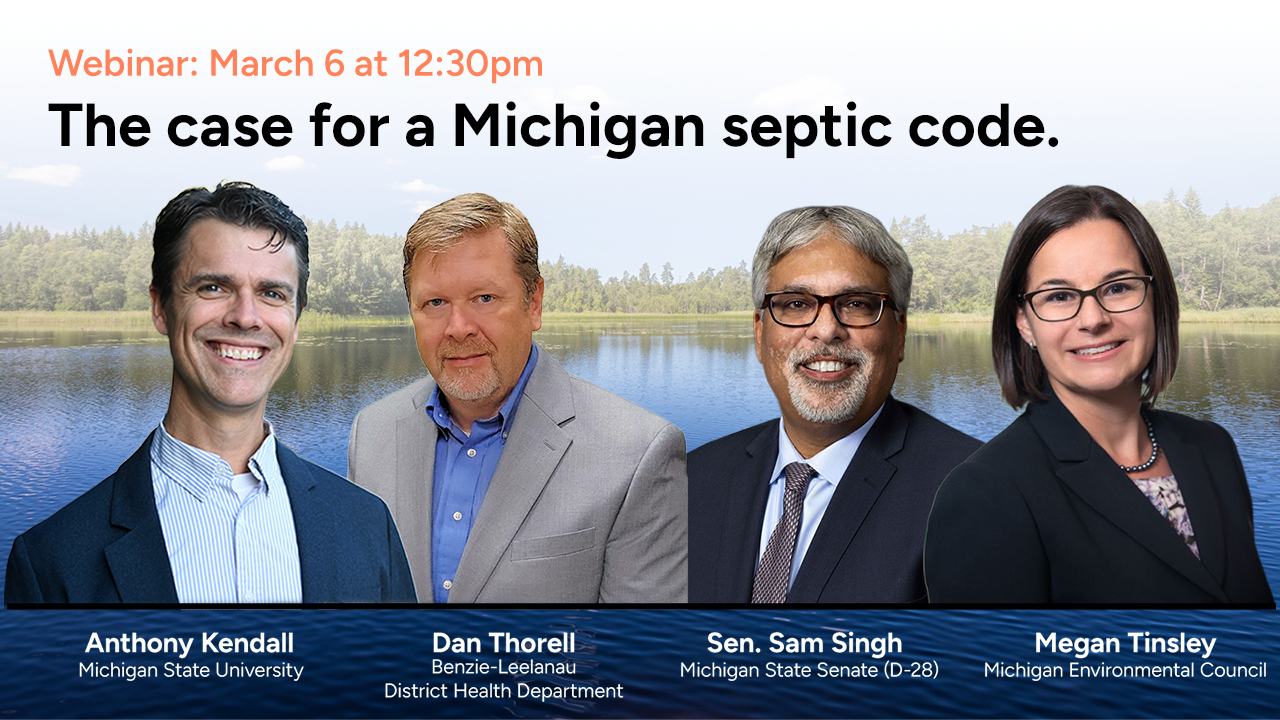
Flow to host webinar about new septic system legislation

Traverse City, Mich. – Michigan’s water and public health are threatened by an estimated 330,000 failing septic systems, but new legislation (SB 771) recently introduced by Sen. Sam Singh (D-28) proposes common-sense statewide septic standards to help keep human and household wastes out of our lakes, rivers, and drinking water wells. Michigan is the only state in the U.S. without a statewide septic code, and only 12 of Michigan’s 83 counties have septic ordinances.

On March 6, 2026 at 12:30pm, Flow Water Advocates will host a live webinar via Zoom with Sen. Singh to discuss Michigan’s outdated, fragmented approach to septic system oversight and how key provisions in the new bill will protect water quality, property values, and human health.

Sen. Singh will be joined by a panel of experts, including Megan Tinsley, Water Policy Director, Michigan Environmental Council; Dan Thorell, Health Officer, Benzie-Leelanau District Health Department; and Anthony Kendall, Assistant Professor of Environmental Science, Michigan State University. The event will be moderated by Skip Pruss, Flow Senior Advisor and former Deputy Director of the Michigan Department of Environmental Quality (now EGLE).

The webinar is free to attend, and will include audience Q&A. Registration is available online at www.FlowWaterAdvocates.org/septic and via Zoom.

Meet our panelists:

Sen. Sam Singh, Michigan State Senator (D-28)
Sam Singh is a Democratic Michigan State Senator representing the 28th District and serves as Senate Majority Floor Leader in his first Senate term. He previously served three terms in the Michigan House of Representatives, where he was selected by his colleagues as Democratic Leader and championed education, environmental protection, and economic development.

Anthony Kendall, Assistant Professor in Earth and Environmental Sciences and AgBioResearch, Michigan State University
A lifelong Michigan resident, he studies how climate and land use impact water resources and the human and ecological systems that depend on them. His research reveals the hidden processes shaping water use and informs resource management decisions. Anthony is also a dedicated educator, training the next generation of scientists, practitioners, and decision-makers at the undergraduate and graduate levels.

Dan Thorell, Health Officer, Benzie-Leelanau District Health Department
Dan Thorell is a public health leader with more than 29 years of experience in environmental health. He serves as health officer for the Benzie-Leelanau District Health Department. He was previously the Health Officer, Deputy Health Officer and
Environmental Health Director at the Health Department of Northwest Michigan. Thorell Executive currently serves on the Board of Directors for the Michigan
Association of Local Public Health.

Megan Tinsley, Water Policy Director, Michigan Environmental Council
The Delta Charter Township resident comes to the Environmental Council with 12 years of combined experience at two Audubon Societies. She began as an Everglades science advocate and policy associate at Audubon Florida, where she coordinated with scientists and other allies to advance restoration projects like increasing freshwater flows to Florida Bay. She then moved to New Jersey Audubon as a conservation associate and a policy director.

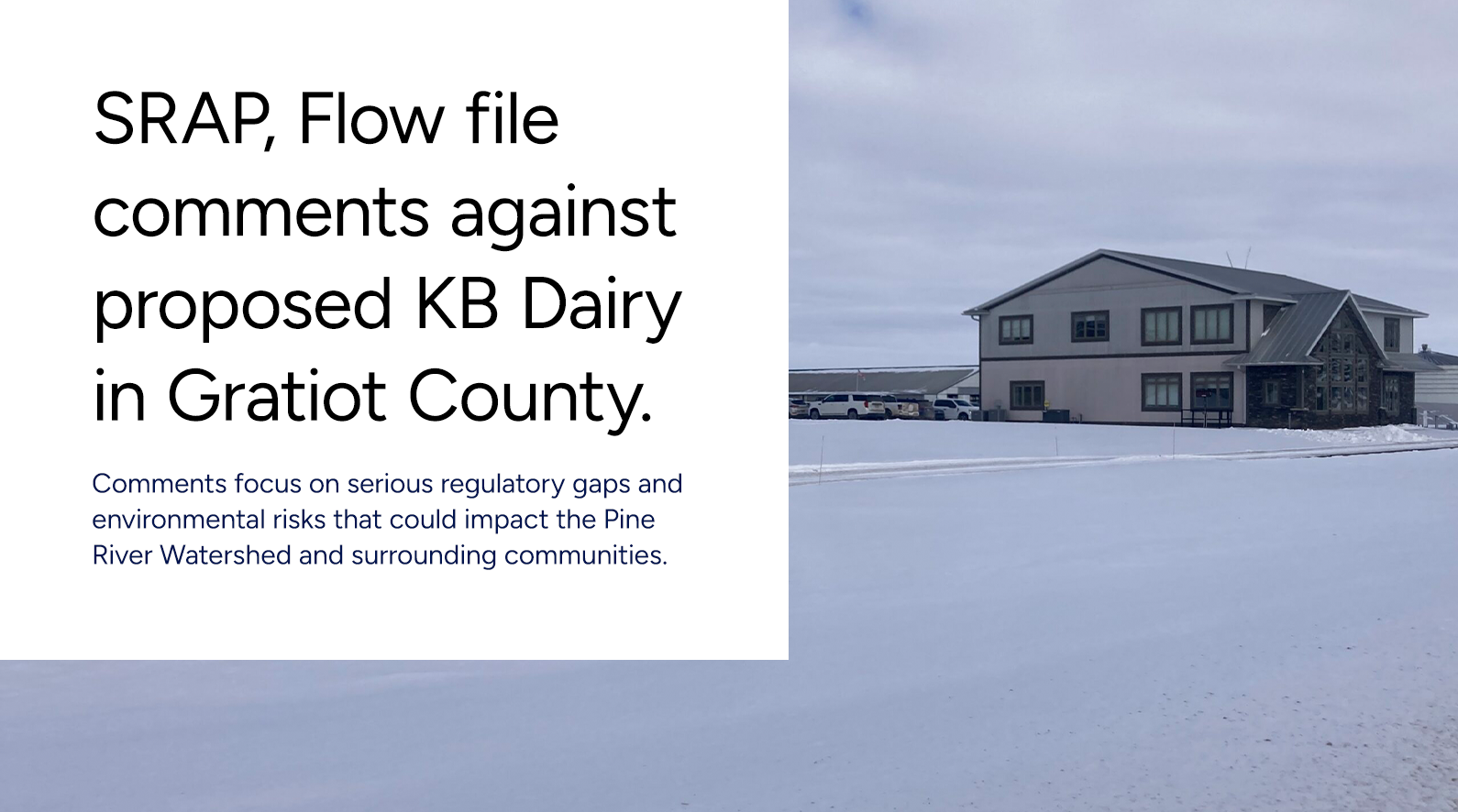
SRAP and Flow file comments against proposed KB Dairy, citing lack of groundwater permit, etc.

In a joint effort to protect water quality and community health in mid-Michigan, the Socially Responsible Agriculture Project (SRAP) and Flow Water Advocates (Flow) have submitted detailed comments urging the Michigan Department of Environment, Great Lakes, and Energy (EGLE) to deny a proposed permit for KB Dairy, a large concentrated animal feeding operation (CAFO) planned near Ithaca. Their joint comments focus on serious regulatory gaps and environmental risks that could impact the Pine River Watershed and surrounding communities.

A strategic partnership for water protection.

SRAP, “Socially Responsible Agriculture Project” is a national nonprofit supporting communities impacted by industrial livestock operations, partnered with Flow, a Michigan-based water protection organization, to bring both legal expertise and local watershed knowledge to the issue. Together, they argue that KB Dairy cannot be evaluated in isolation. Instead, it must be considered alongside the adjacent De Saegher Dairy and related entities because of shared infrastructure, waste systems, and ownership ties.

Big issues raised in the comments.
  1. Failure to require a groundwater permit
    The groups argue that the combined number of animals at the KB and De Saegher facilities far exceeds Michigan’s regulatory threshold requiring a state groundwater discharge permit. With nearly 12,000 cattle projected at the site, and documented shallow groundwater conditions, they contend that relying solely on a CAFO general permit ignores clear risks to drinking water and aquifers that feed into the Pine River system.

  2. Commingled waste and common infrastructure
    The comments detail how waste from multiple dairies is piped into a shared anaerobic digester and then redistributed back into storage lagoons and land application fields. This commingling of manure and digestate—along with shared roads, storage pits, and irrigation systems—indicates the facilities function as one operation. Treating them as separate entities, SRAP and Flow argue, allows operators to skirt stricter environmental oversight.

  3. Common ownership and regulatory evasion
    The organizations present evidence suggesting overlapping corporate control, shared financing, land transfers, and joint mortgages among the dairy entities. Under state and federal rules, adjacent operations under common ownership using shared waste systems must be permitted together. Failing to recognize this relationship, they argue, undermines enforcement and weakens public protections.

Impacts on public health & the environment.

The Pine River Watershed includes vulnerable soils, shallow groundwater, and hydrological connections that make it particularly susceptible to nutrient pollution. Excess nitrogen, phosphorus, pathogens, and emerging contaminants from manure and digestate can contaminate private wells, harm aquatic ecosystems, and contribute to algal blooms downstream.

By calling for a comprehensive groundwater review and a unified permitting approach, SRAP and Flow are urging regulators to prioritize science-based oversight. Their message is clear: without stronger scrutiny, the expansion of industrial dairy operations could jeopardize clean drinking water, degrade the Pine River, and place long-term public health and environmental integrity at risk.

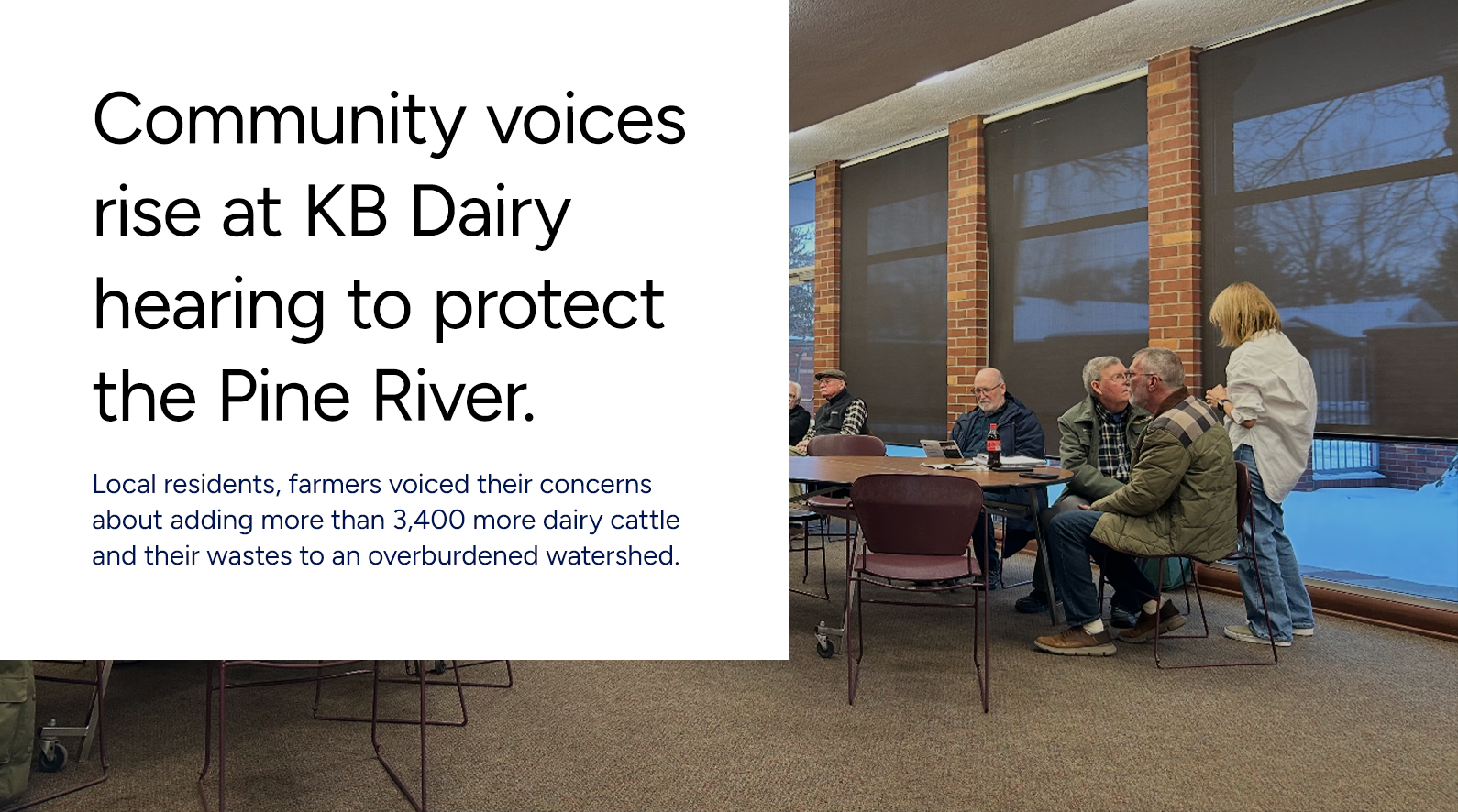
Community voices rise at KB Dairy hearing to protect the Pine River Watershed

On February 3, 2026, Flow, in partnership with Michiganders for a Just Farming System, hosted a virtual watch party for the KB Dairy public hearing. KB Dairy is a proposed CAFO facility in Gratiot County. The permittee has submitted materials to obtain coverage through a National Pollutant Discharge Elimination System (NPDES) permit. If approved, KB Dairy would begin dairy operations southwest of Ithaca, Michigan, immediately adjacent to their “parent” facility, De Saegher Dairy. Construction of the facility is already underway, however no animals are currently present on the site. 

Local residents, farmers, business owners, and advocates gathered and voiced their concerns about adding more than 3,400 more dairy cattle and their wastes to an already overburdened watershed. The proposed facility would be located within the Pine River Watershed, which has a storied history of industrial, and now agricultural pollution. Residents expressed their frustration with the situation, and the need for a more responsible agricultural future for their community. Speakers reminded EGLE that their priorities should be the health and quality of life of the people, not the benefit of one industry or permittee. 

Beyond allowing opportunities to make public comment, this event brought together folks from around the area to build relationships and share their experiences. Hosting events and creating space for local residents to connect and become empowered can amplify advocacy efforts throughout the state. Whether it’s fighting factory farms, oil and gas companies, or industrial polluters, residents typically feel that they are fighting an uphill battle with not enough resources. Flow strives to create space for people to come together and realize the strength they hold as a community. 

Flow's Chelsea Faber spoke with The New Lede's Brian Bienkowski about the Gratiot County CAFO! Watch the video below!

Tell us why you love the Great Lakes this February!

In the spirit of Valentine’s Day, we invite you to share a few words about why you love the Great Lakes.

Is it the water, the memories, the wildlife, or the feeling of home they give you? Your story helps show what’s truly at stake when we work to protect them. Leave a note and spread the love for the Great Lakes and for future generations.

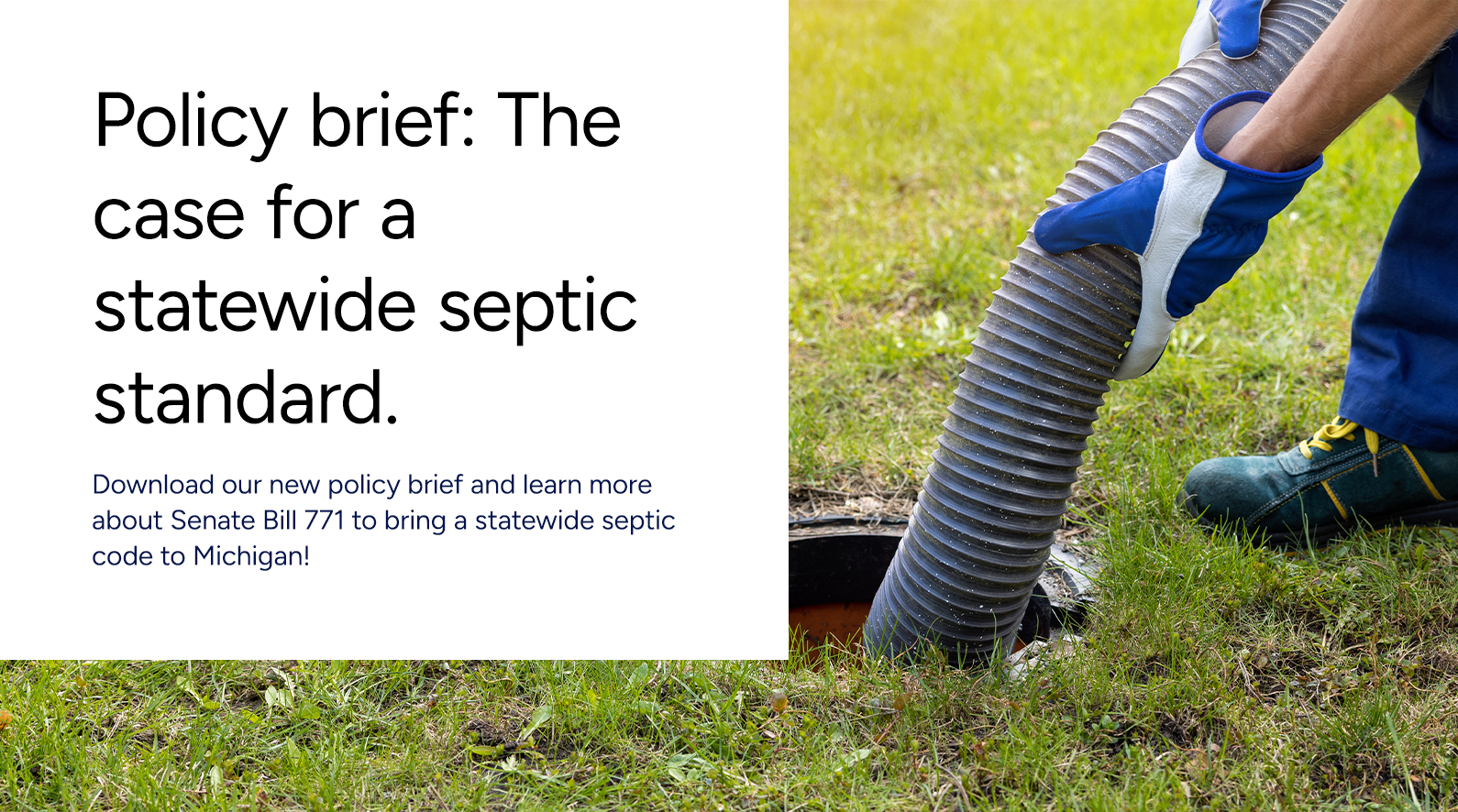
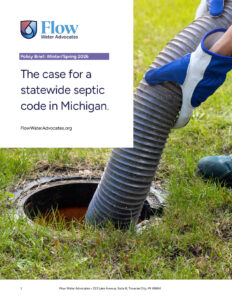
Policy brief: The case for a statewide septic code in Michigan.

Our invisible water crisis.

Michigan faces a long-standing and largely invisible water quality crisis driven by failing septic systems. The Michigan Department of Environment, Great Lakes, and Energy (EGLE) estimates that 330,000 of Michigan’s 1.3 million septic systems are currently failing. Untreated sewage is entering groundwater, rivers, and lakes at alarming rates. Studies have documented human fecal contamination in 100% of sampled rivers in the Lower Peninsula, demonstrating that failing or substandard septic systems — also known as onsite wastewater systems — are a major and widespread source of pollution.

Michigan is located at the heart of the most extensive fresh surface water system in North America, yet it remains the only state without a statewide septic code, leaving most households without consistent standards for installation, maintenance, inspection, or repair. As of early 2026, only 12 of Michigan’s 83 counties have local septic ordinances — which vary widely in scope and effectiveness. The result is a fragmented, inequitable, and inadequate framework that has allowed the dangers of failing systems to persist for decades. Following well over a dozen prior attempts to pass statewide standards, legislation introduced in early 2026 (Senate Bill 771) offers the most achievable path in decades toward addressing Michigan’s septic system failures.

Download our policy brief: The case for a statewide septic code in Michigan.

This fact sheet breaks down the State’s need for a statewide septic code to better protect the Great Lakes. Download our new policy brief to learn more the challenges and proposed legislation. 

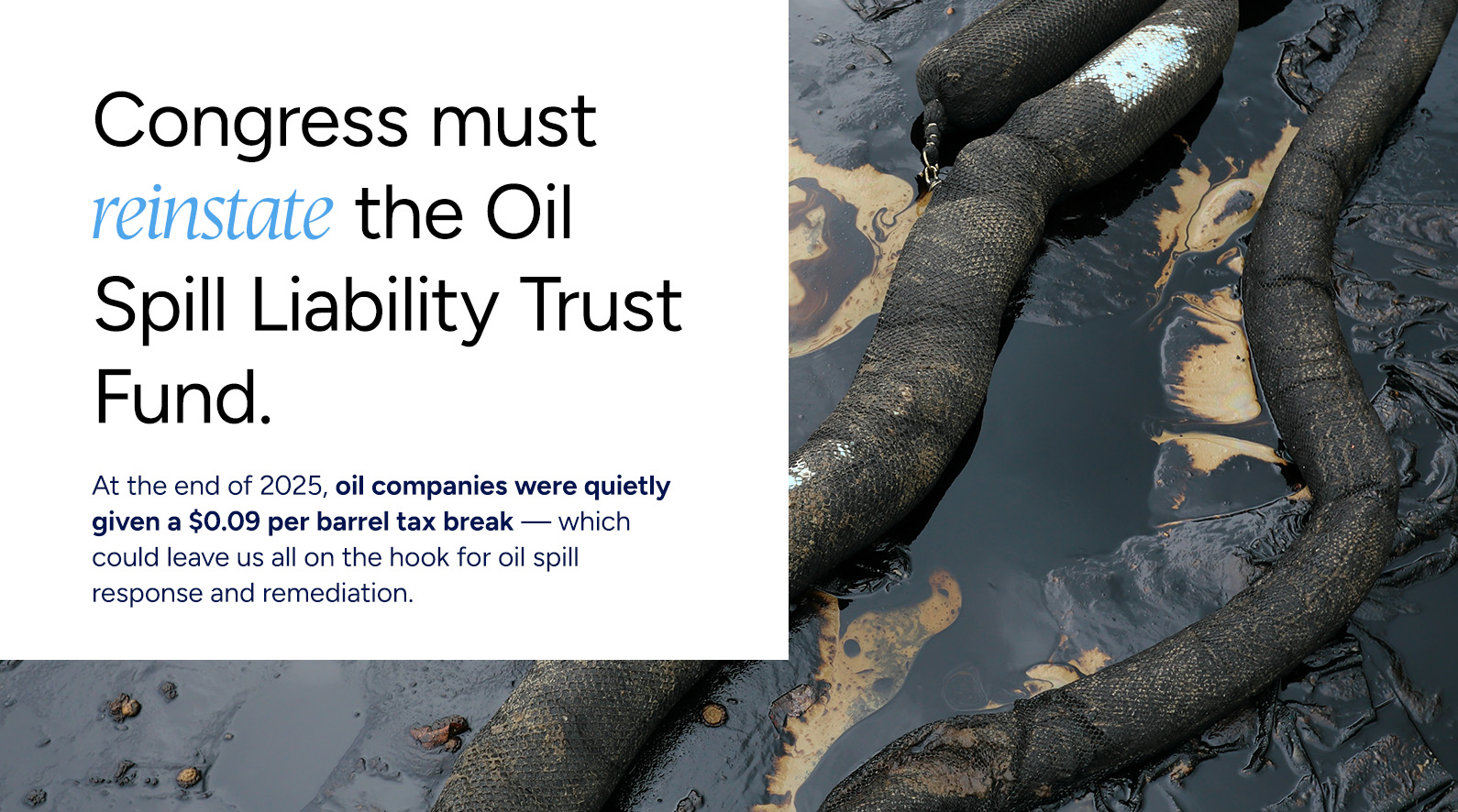
Congress must reinstate the Oil Spill Liability Trust Fund (OSLTF)

On December 31, 2025, the Oil Spill Liability Trust Fund Act (OSLTF) expired.1 The OSLTF was first authorized to tax oil producers in 1990, and provided funds for federal responses to oil spills and compensation for certain damages.2 Without the OSLTF, states and taxpayers may be left on the hook for oil spill costs and remediation.

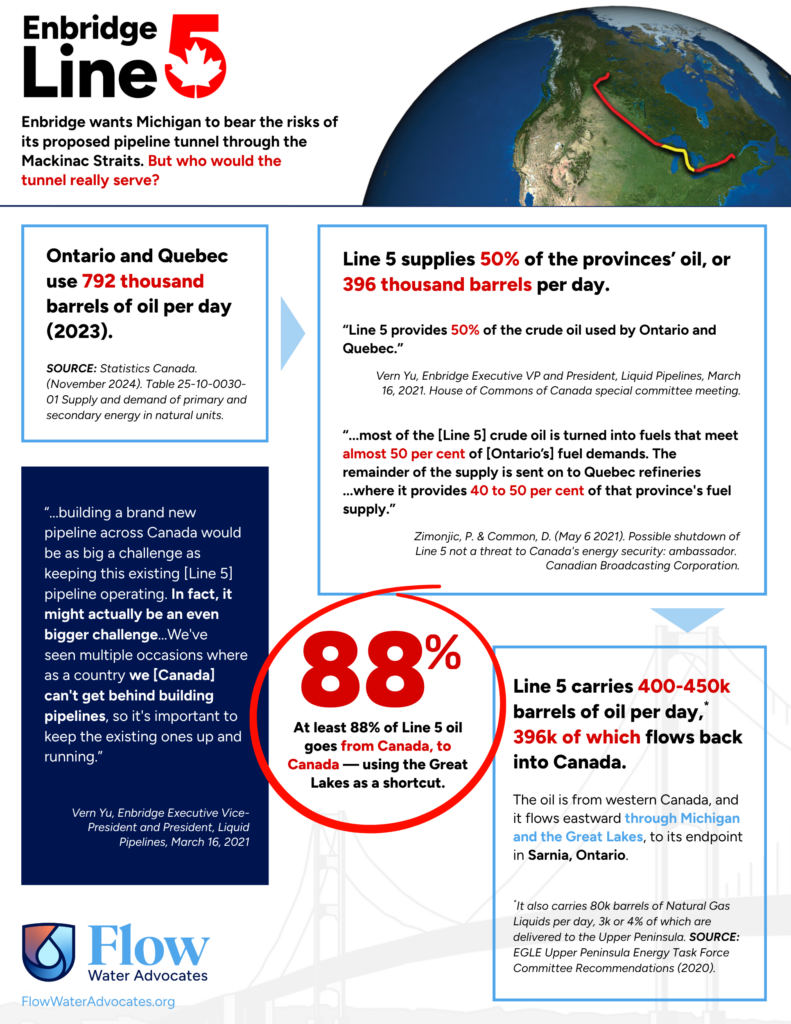
Here in Michigan, the Enbridge Line 5 pipeline — which carries more than 540,000 barrels of petroleum products a day through the Straits of Mackinac where Lake Michigan and Lake Huron meet — has leaked more than 30 times in its 72-year-lifespan.3 According to a 2016 University of Michigan study, more than 700 miles of Great Lakes shoreline would be at risk if the pipeline fails.4 The results would be catastrophic for Michigan and our natural resources, and OSLTF funding would be essential for any hope of recovery (if even possible).

Prior to its expiry, funding from the OSLTF was pulled from two major buckets: the emergency fund, and the principal fund.5 The emergency fund was used by federal employees to respond to oil discharges and make initial natural resource damage assessments.6 While the principal fund was used to pay claims (generally damages not paid by the polluter) and fund appropriations for research and development.7 The OSLTF had been financed primarily by a per-barrel excise tax on domestic crude oil and imported petroleum, which recently sat at $0.09 per barrel.8

The OSLTF was last extended in 2021 by the Consolidated Appropriations Act, and in the 118th Congress, some members of congress introduced legislation (H.R.8554 and S.4406) that would have extended the per-barrel tax without expiration and increased the tax rate to 10 cents per barrel. This legislation failed, and similar legislation has not been proposed by the 119th Congress.9

Without this tax, there is no OSLTF funding to remediate damages to natural resources caused by oil spills, and some of the world’s wealthiest companies and worst polluters are afforded yet another break by the Trump Administration. While the precise motivation behind Congress’ decision not to reinstate the tax remains unclear, one thing is certain–if a high-volume oil spill occurs (like the potential of a Line 5 incident), remediation would be severely curtailed without the OSLTF.

Fortunately, there are some other funding buckets that the government can pull from for oil spill remediation, such as the Hazardous Substance Superfund. In 2026, oil producers can expect to pay $0.18 per barrel for the Hazardous Substance Superfund, but producers are now no longer paying the $0.09 per barrel OSLTF tax.10 The OSLTF tax could be reinstated at any time, if there is the political will to do so.11 In previous years, the tax has had gaps in its active status, for example, it expired in 2018 but was reinstated in 2020.12

This tax may someday be essential to save the Great Lakes from the worst potential Line 5 outcome. We encourage you to call your representatives today and urge them to reinstate the OSLTF.


References

1 Ramseur, Jonathan L., The Oil Spill Liability Trust Fund Tax: Background and Selected Issues, Congress.gov, https://www.congress.gov/crs-product/IF13049.
2 Id.
3 Matt Davenport, Line 5 and its risks: ‘The consequences of failure would be catastrophic.’, UMich News (May 28, 2025) https://news.umich.edu/line-5-and-its-risks-the-consequences-of-failure-would-be-catastrophic/.
4 Id.
5 Upper Mississippi River Basin Association, UMR Resource Manual- OSLTF, https://umrba.org/sites/default/files/documents/UMR-Resource-Manual-OSLTF.pdf.
6 Id.
7 Id.
8 Supra, nite 1.
9 Id.
10 Jack McLoone, Tax Funding Oil Spill Cleanups Has Expired, IRS Clarifies, Law360 (Jan. 7, 2026) https://www.law360.com/articles/2427647/tax-funding-oil-spill-cleanups-has-expired-irs-clarifies.
11 “Oil spill tax” imposed under section 4611 expired on December 31, 2025, KPMG (Jan. 2, 2026) https://kpmg.com/us/en/taxnewsflash/news/2026/01/oil-spill-tax-imposed-section-4611-expired.html.
12 Id.