Tag: groundwater

An enduring gift: The legacy of Michael Cameron Dempsey and Michigan’s water resource

By Dave Dempsey, Flow Senior Advisor

My first memory of my nephew Michael comes from playing peekaboo. Using a toy with a see-through panel, I ducked in and out of view to his appreciative baby laughter. Pretty soon he was pulling the same trick on me. He was a quick learner.

I would think of that simple joy over 20 years later. With his parents, his sister, and my younger brother, I watched Michael’s powerful oration at the graduation ceremony for the School of Urban Planning at the University of Michigan, where he obtained his master’s degree.

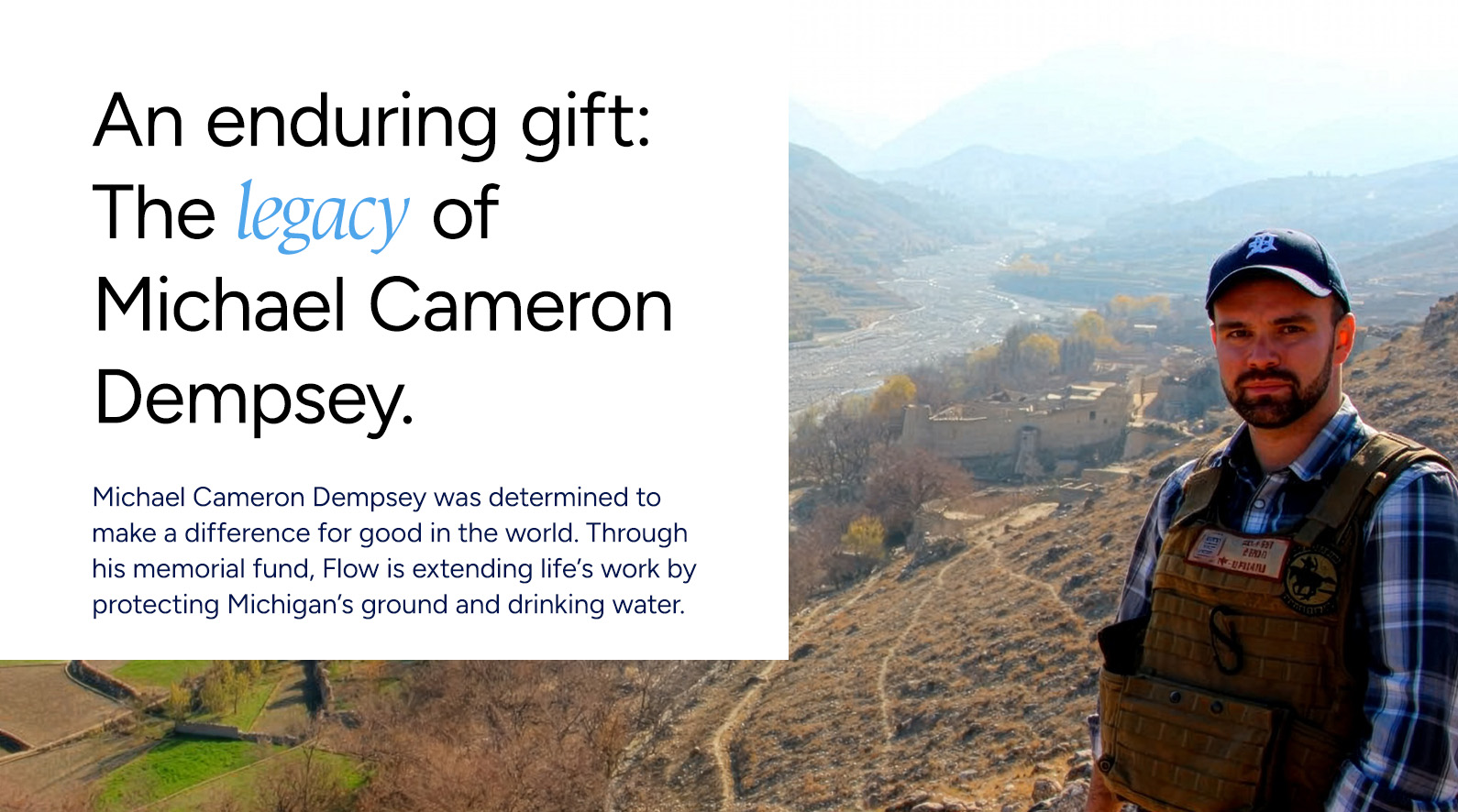
The infant with the delighted laugh had grown up to be a leader, a man respected by all of those with whom he had contact, a man determined to make a difference for good in the world. And although his life was tragically far shorter than my family envisioned and desired, Michael did make a difference – a vast one. And he is still making one.

Most recently, the fund, endowed largely by Michael’s estate, generously granted $20,000 to Flow Water Advocates to support a project challenging a talented team of college students to research and propose a strategy to protect Michigan’s groundwater — the source of drinking water for over 4 million Michiganders. Fittingly, the students engaged in the project attend the University of Michigan — specifically, the School of the Environment and Sustainability (SEAS).

The work of the SEAS team is just another example of how Michael’s life continues to benefit the state that cradled him and was his home for the majority of his 33 years. It is also another way in which he is benefiting both the natural environment and the built environment of the pleasant peninsulas.

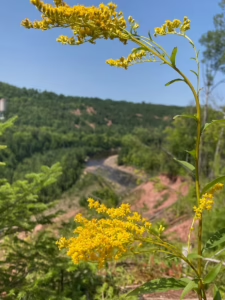
The Mike Dempsey Memorial Preserve is a 40-acre area adjacent to the West Branch of the Ontonagon River, which flows into the main branch of the Ontonagon River, a federally designated Wild and Scenic River. [PHOTO: Upper Peninsula Land Conservancy]

One of Michael’s passions was restoring vibrant communities. His first professional stop after graduation from U-M was the Detroit Economic Growth Corporation, where he assisted with projects opening up the Detroit riverfront to the public and creating an urban trail connecting city neighborhoods with the river.

Michael also wanted to put his mind and skills to work in other nations. He assisted with planning for change in the metropolis of Abu Dhabi and worked through U.S. AID to facilitate electrification of rural Afghanistan. In each of these and other endeavors, he sought to improve the lives of those he served. His idealism was expressed in deeds, not words alone, and improved many lives.

Michael’s affinity for healthful environments embraced green space, too. He enjoyed the outdoors for recreation and reflection. To express that, the Michael Cameron Dempsey Fund has supported two land conservation projects, including the Mike Dempsey Memorial Preserve, a spectacular 40-acre parcel along the North Country Scenic Trail south of Ontonagon. The Upper Peninsula Land Conservancy is steward of the preserve, which offers scenic vistas and a diversity of flora and fauna.

As the Fund’s website says, “Michael was passionate about conservation, about making the world a better place and helping those no matter where they dwell in it. He sought to extend the grace of God to all. Michael could not stand to pass someone in need without lending a helping, gentle hand.”

“We are honored and humbled by this gift from Michael’s memorial fund,” said Flow executive director Liz Kirkwood. “His life and values inspire us to expand his legacy to include protection of our drinking water.”

Michael’s life has sent, and continues to send out ripples of hope. Flow Water Advocates will make sure his fund’s gift will carry on his work.

Septic systems standards legislation introduced in Michigan state senate

January 28, 2026

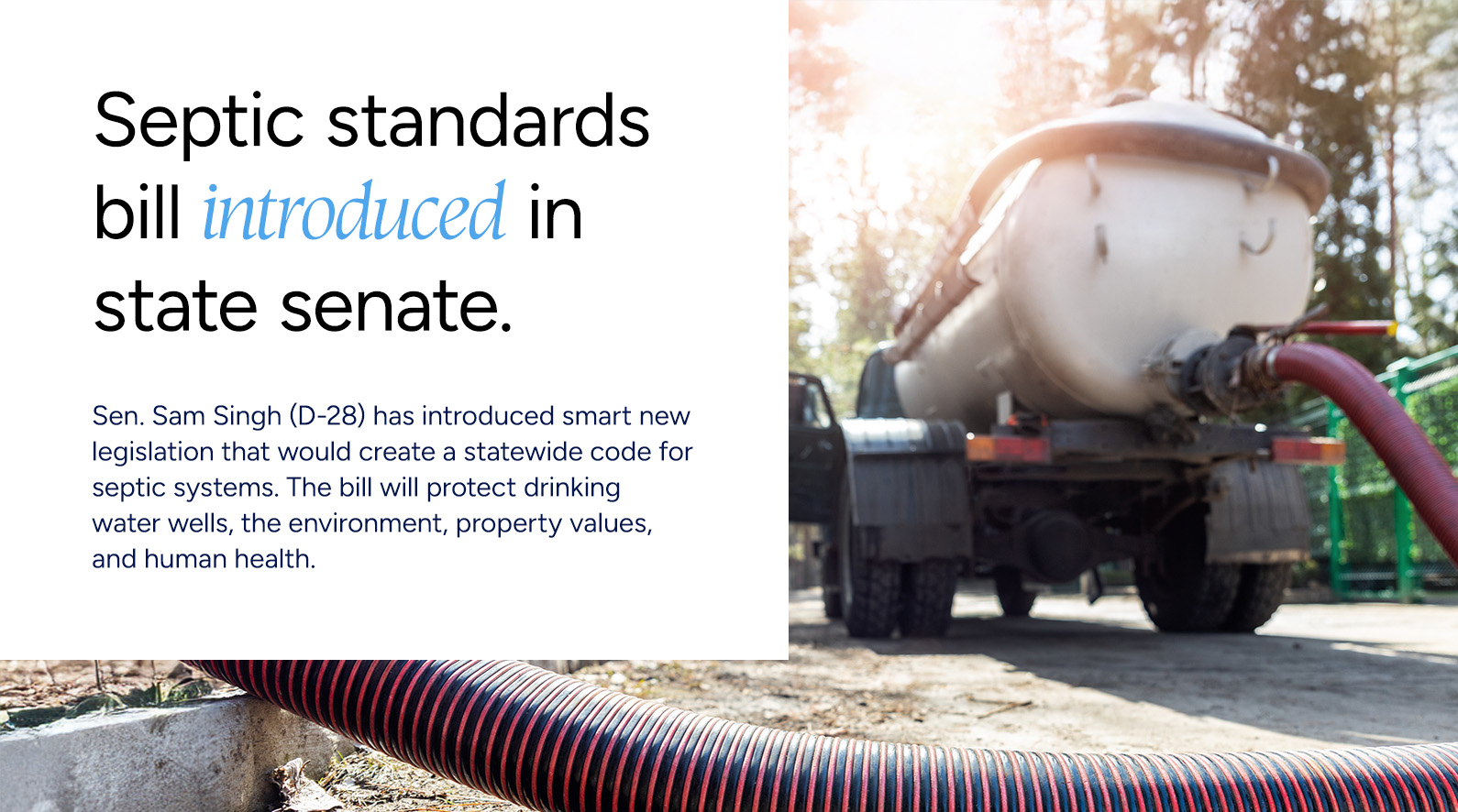
Lansing, Mich. – Today in the Michigan Senate, Sen. Sam Singh (D-28) introduced legislation to establish the state’s first-ever comprehensive framework for the oversight and maintenance of onsite wastewater treatment systems, also known as septic systems. The legislation (SB 771) will modernize Michigan’s outdated approach to septic system oversight, and protect the health of communities and the state’s lakes, rivers, and groundwater.

Live webinar: The case for a statewide septic code in Michigan

Join us on March 6 at 12:30pm for a live webinar with Sen. Sam Singh and a panel of experts, as we discuss the new legislation and answer your questions.

Register online

Michigan is the only state in the nation without a statewide sanitary code for septic systems, despite widespread evidence that failing and aging systems contribute to bacterial and nutrient contamination in drinking water wells and surface waters. The legislation recognizes that while properly functioning septic systems are an effective and affordable wastewater solution, septic system failures pose serious risks to public health, safety, and the environment.

Michigan has attempted to pass a statewide septic code over a dozen times and counting over the past decades, but previous efforts have repeatedly stalled in the legislature. The new bill requires the Department of Environment, Great Lakes, and Energy (EGLE) to develop a Statewide Sewage Code within three years, creating uniform performance-based standards for both conventional and alternative septic systems. If the legislation is passed and signed into law, Michigan will have consistent, enforceable protections to prevent failing systems from contaminating groundwater and surface waters — a critical step forward for public health and water quality.

Key provisions of the bill include:

  • Homeowners with high-risk or older systems (20+ years and within 500 feet from any surface water or within a high-risk erosion area, critical dune, or 100-year floodplain) are evaluated first, followed by routine 10-year inspections and checks before any change or increase in use.
  • The bill defines a septic system “failure” and authorizes local health departments to inspect, evaluate, and enforce compliance.
  • The law establishes a Technical Advisory Committee: a group of highly qualified experts — including local health officials, engineers, soil scientists, and environmental organizations — that will guide EGLE in developing rules and performance standards.
  • A new Onsite Wastewater Treatment System Administration Fund, which will provide grants to local health departments, support digitization of septic records, fund public education campaigns, and assist low-income homeowners with inspection and repair costs.
  • The legislation allows the use of approved alternative and innovative treatment technologies to meet state standards, ensuring flexibility for communities and property owners.

To ensure compliance, the bill includes civil fines, liens for chronic noncompliance, and criminal penalties for falsifying reports or conducting unregistered evaluations.

“It is high time for Michigan to adopt a uniform septic code,” said Liz Kirkwood, Flow Water Advocates executive director. “Failing and aging systems threaten drinking water and our lakes and rivers. This legislation establishes common-sense protections that every Michigander can support — because clean water is not optional, it’s essential for our health and communities.”

Flow applauds Sen. Singh for his leadership in addressing one of Michigan’s most persistent and under-regulated sources of water pollution. The legislation builds on years of collaboration among environmental organizations, local health departments, and clean water advocates to create a fair, science-based approach to septic management that works for both rural and urban communities.

“Clean water begins at home,” Kirkwood added. “With this legislation, Michigan finally recognizes that protecting our water means maintaining the systems that return it to the ground.”

###

Flow Water Advocates is an independent 501(c)(3) nonprofit organization based in Traverse City, Michigan. Our mission is to ensure the waters of the Great Lakes Basin are healthy, public, and protected for all. With a staff of legal and policy experts, communicators, and community builders, Flow is a trusted resource for Great Lakes advocates. We help communities, businesses, agencies, and governments make informed policy decisions and protect public trust rights to water. Learn more at www.FlowWaterAdvocates.org.

Rising groundwater use, sinking cities

A study recently published in the science journal Nature documents a worsening problem that is invisible to all but the closest observers. The study found that the 28 most populous U.S. cities – including Detroit and Chicago – are all slowly sinking. Massive groundwater extraction is the most common cause of the land movements, the study authors said.

Detroit is among the top 10 in subsidence, sinking at an average rate of 1.726 millimeters annually. That may not sound like much, but it adds up to more than half a foot per century – enough to pose significant challenges for cities.

A separate study found another phenomenon leading to sinking cities: heat released from underground structures, such as parking garages, basements, subway tunnels, and sewers, which gradually deforms the surrounding earth. Also, as aboveground temperatures rise in response to greenhouse gas emissions, subsurface temperatures gradually follow. Existing structures aren’t designed for those variations, leading to shifts, tilts, and even cracks in infrastructure. This is known as “underground climate change.”

The sinking, also known as land subsidence, affects at least 20% of the urban area in the cities studied, and approximately 34 million people. The study found that more than 29,000 buildings in the 28 cities are located in high and very high damage risk areas.

The cities with the most widespread subsidence in the United States, with about 98% of the cities’ area affected, include Chicago, Dallas, Columbus, Detroit, Fort Worth, Denver, New York, Indianapolis, Houston, and Charlotte. In five cities—New York, Chicago, Houston, Dallas, and Fort Worth—at least 10% of the city area of Chicago is sinking at a rate exceeding 3 millimeters (.12 inches) per year.

Leonard Ohenhen, lead author of the new study, said solutions include land raising, enhanced drainage systems, and green infrastructure.

It is likely that part of the subsidence affecting Detroit is due to the interaction of clay soils and increasing temperatures. Clay contracts as temperatures increase. This causes building foundations to settle slowly. Further, a phenomenon known as glacial isotatic adjustment, or the slow rebounding of earth from glacial weight in the northern portion of the Great Lakes basin is likely contributing to Detroit’s subsidence.

Extraction of groundwater is having other effects on the planet. Researchers have found that extreme pumping of groundwater has even contributed to a shift in Earth’s axis.

Grand Traverse County takes bold step protect and our lakes

Last week, Grand Traverse County took a major step forward in protecting its waters and residents by unanimously passing a countywide septic regulation. This landmark decision marks the first time the county has adopted rules to systematically evaluate septic systems near water bodies. While the regulation may appear modest in scope, its implications are profound. With 132 miles of coastal shoreline, over 146 named lakes and many unnamed ones, two major rivers, Grand Traverse County is positioning itself as a leader in safeguarding public health and freshwater resources in the absence of a statewide septic code.

Beginning January 1, 2026, any property with a septic system that is located within 300 feet of surface water–defined as any above-ground body of water such as lakes, ponds, streams, or rivers–must be evaluated before it can be sold or transferred. This requirement will be enforced as determined by the County Health Department. This is not just a technical requirement; it’s a foundational piece of public health infrastructure. Properly functioning septic systems are essential to preventing pathogens, as well as nutrient and chemical pollution from entering our waters and groundwater.

At FLOW, we commend the Grand Traverse County Board of Commissioners for taking this step. 

We also extend deep thanks to the Grand Traverse County Health Department, whose thoughtful and transparent process has led to a strong, fair, and flexible ordinance. This is how government should work–responsive to public input, guided by science, and committed to public service.

Thoughtful design, public process

The new ordinance reflects months of public input and background work by the County Health Department, which consulted with neighboring counties like Leelanau, examined the proposed statewide septic code, and made significant changes to the draft regulation based on community feedback– specifically including FLOW’s. Changes include shifting 

the term from “inspection” to “evaluation,” adding detailed definitions for clarity, and aligning terms with those currently used in other jurisdictions. This attention to consistency and clarity will be critical to helping property owners and professionals navigate the new requirements in a statewide code if adopted by the 103rd legislature.

Even more important, the County Health Department is designing the implementation process from the ground up. This includes building out staffing and vehicle capacity–already funded in the county budget–creating evaluation guidelines drawn directly from the regulation, and developing a map to identify all dwellings within the 300-foot buffer zone. Their goal is to identify roughly 85% of impacted systems within 90 days after implementation. 

Regulation with compassion

Crucially, this isn’t a punitive regulation. The County Health Department has made clear that the role of public health is not to “rule with a heavy hand.” In the words of Deputy Health Officer Mike Lahey, “That is not a great recipe for success.” Instead, the process prioritizes communication, problem-solving, and collaboration with homeowners. Evaluations are conducted by certified professionals, and if repairs are needed, homeowners have up to 180 days to take corrective action–with the option to submit a repair plan and post a surety deposit to ensure work is completed.

For those acting in good faith, the County Health Department will be a partner, not a punisher. At the same time, the ordinance includes enforcement mechanisms for bad actors who attempt to skirt the rules. Citations can be issued if necessary, and a process is in place for appeals and compliance timelines.

For those acting in good faith, the County Health Department will be a partner, not a punisher.

A public-private partnership

One of the most exciting parts of this effort is the County Health Department’s commitment to ongoing collaboration. They’ve already expressed interest in forming a working group or advisory committee of community partners–including groups like FLOW, Aspire North, and the Grand Traverse Watershed Center–to help shape the final departmental guidelines. These guidelines will be reviewed and updated regularly, ensuring the program remains flexible and responsive to emerging needs.

This summer will be a critical time for public outreach. The County Health Department plans to host open houses, share educational materials, and launch a countywide communications campaign to clarify the new regulation–especially in light of potentially conflicting township ordinances. Their outreach coordinator will lead press releases and public education efforts, with the goal of building community understanding and support well in advance of the January launch.

Leading the Way for Michigan

Michigan remains the only state in the country without a statewide septic code.

In that context, Grand Traverse County’s new ordinance is not just a local victory–it’s a model for the rest of the state. It demonstrates that local governments can lead with vision, humility, and a commitment to protecting the public good. FLOW continues to advocate for statewide action, but in the meantime, we celebrate this local step forward.

We thank the Grand Traverse County Board of Commissioners for their leadership, the County Health Department for their dedication, and the many residents and community partners who spoke up and helped shape this regulation. We look forward to supporting the implementation process in the months ahead.

This is how change begins–not with sweeping mandates, but with thoughtful steps and strong partnerships from the ground up. And in this case, those steps are leading us toward cleaner water, healthier communities, and a better and brighter future.   

Celebrating a Partnership: FLOW & University of Michigan SEAS Students to Address Groundwater Policy Reform in Michigan

Early this winter, FLOW and students from the University of Michigan’s School for Environment and Sustainability (SEAS) graduate program teamed up for a 16-month initiative to examine Michigan’s groundwater management and propose a statewide strategy to ensure long-term, sustainable groundwater governance.

Flow Water Advocates is grateful to announce a $20,000 leadership gift in support of our University of Michigan SEAS groundwater project, made through the Michael Cameron Dempsey Fund. This investment will strengthen critical research and policy work to protect groundwater resources across Michigan and the Great Lakes region. This project is a direct investment in the next generation of Michigan-trained environmental leaders and advocates, carrying forward Michael’s commitment to public service, sustainable communities, and the protection of natural resources. We are honored to carry his legacy forward through this work.

Protecting and managing groundwater is particularly complex given the lack of comprehensive data, fragmented state authority governing water quality versus quantity, unclear and differing policies managing water quantity versus water quality, and the lack of public education and knowledge. Over the last five years, an increasing number of state agencies, scientific experts, philanthropy, and nonprofits have raised awareness of this understudied, underfunded, and underappreciated resource that is integral to the health and well-being of all Great Lakes waters.

Building on these previous groundwater reports and assessments, FLOW, in partnership with the University of Michigan’s SEAS, will develop a strategy for groundwater reform that addresses quantity, quality, and justice challenges; and offers regulatory, statutory, and institutional structural recommendations. Specifically, the SEAS students will conduct:

  • A systematic review and gap analysis of Michigan’s current groundwater authorities, programs, and processes;
  • A Technical analysis of groundwater information availability and gaps;
  • A review of and analysis of successful groundwater protection policies and frameworks from other states, US regions, and other nations and their applicability in Michigan
  • A set of stakeholder and rights holders interviews and focus groups to determine feasible next steps for a water strategy; and
  • A summary of scientific findings and policy recommendations to address Michigan’s groundwater governance.

We asked the SEAS graduate students to share their perspectives about this groundwater project:

Lillian Wege
What is something people don’t know about groundwater, that you wish they did?

I wish more people knew how connected surface water and groundwater are. When we think about protecting water in Michigan, a lot of people think about mitigating pollution in the Great Lakes. But groundwater is susceptible to pollution from many activities – from residential septic systems to farms and factories – and all our water in the Great Lakes basin is connected. Groundwater is especially tricky because contamination moves, eventually ending up in surface water bodies like lakes, and we don’t track that in Michigan. If you care about protecting the Great Lakes, or even if you just love to swim once the water gets warm enough in July, you should be thinking about protecting groundwater, too!

Emma Welsh
If you could change one thing about the state’s management of groundwater, what would it be?

If I could change one thing about the state’s management of groundwater, it would be the addition of a statewide septic code. Historically, septic systems have been regulated by local governments and local health department codes. Currently, only 11 out of 83 Michigan counties have established septic codes that require inspections at the point of property sale; other counties do not have regulations for regular inspection. Without consistent inspections or maintenance requirements, failing septic systems can go unnoticed for years, potentially contaminating groundwater that rural communities depend on for drinking. As someone from rural Michigan, where we rely on well water and septic systems, I feel as though it’s important to establish a statewide code to help ensure that all systems are functioning properly, regardless of where you live.

Paige Lund
What do you hope will be the outcome of this project? 

I hope that our team is able to positively contribute to the ongoing and complex conversation regarding groundwater resources in Michigan. A lot of great work has already been done in this field and we hope that our research and findings will help to synthesize existing knowledge and data. We intend to research and gather guidance from Michigan community members, state regulators, and examples set by other states, in order to create a statewide strategy that integrates groundwater quantity, quality, interconnected surface waters, and justice challenges. Through doing so, it is our goal to advance Michigan’s approach to groundwater management through proposing a comprehensive, strategic, and effective plan for the state. Overall, our hope is that this work will inform advocacy organizations and provide tangible recommendations to state agencies in a manner that is both actionable and uplifting for all impacted parties.

Stephanie Smith
What is something the state is doing right on groundwater policy? 

One component of Michigan’s groundwater policy that sets a strong example for other states is our integration of a permanent Water Use Advisory Council (WUAC). This council opens a crucial avenue for dialogue between community members, the private sector, and the state’s Department of Environment, Great Lakes, and Energy. By bringing together these parties to discuss the current policy and management landscape, the State is proactive in addressing emerging concerns with its groundwater policies and programming. Members identify gaps in resource monitoring and potential areas of growth for water withdrawals. The biennial reports released by Michigan’s WUAC are great resources to inform next steps for groundwater in the state, and have been important references for our team as we begin to build out our strategy report. Our work aims to build on past WUAC reports through community engagement, case studies, and action steps that engage not just policymakers, but also advocacy groups and the private sector.

Ashutosh Mirashe
How does this project support your career goals?

My long-term goal is to work at the intersection of environmental policy and sustainable systems, and community-driven resource management, and this project provides me the opportunity to support my goals. As someone experienced with corporate sustainability initiatives, I have seen how policy, data, and stakeholder engagement can be integrated to drive a meaningful impact. Through this capstone with FLOW, I’m deepening my skills in groundwater governance, spatial analysis, and strategic planning, the tools I aim to carry forward into my career in environmental consulting or policy making. I’m gaining skills by contributing to real-world solutions, while aligning my passion for equitable and science-based environmental management.

Kelsey Campana
What’s the most interesting thing you’ve learn during this project so far?

The background research we have done so far has led me to learn a lot of interesting facts about groundwater. Many complex and interrelated threats to groundwater affect both quality and quantity. When thinking about water in Michigan, quantity concerns may not be top of mind, however, as I have learned in some places throughout Michigan, this is a real threat. Although Michigan’s groundwater is roughly equivalent to that of Lake Huron, aquifers are being depleted faster than they can be replenished, which can further amplify quality issues. The competition for groundwater is growing, and this challenge, along with many others, must be adequately addressed if we hope to have sustainable water practices for generations to come.

EPA bans toxic TCE, which has plagued Michigan’s groundwater

The Environmental Protection Agency announced last week a national ban on trichloroethylene (TCE), a groundwater and soil contaminant confirmed at over 300 sites in Michigan. The move will save Michigan taxpayers millions of dollars in future cleanup costs and protect public health.

“EPA’s action is critical to public health and the environment,” said FLOW executive director Liz Kirkwood. “It shows why America needs protections against environmental hazards through enforceable rules. The incoming Trump Administration should not pursue deregulation that worsens the health of Americans.”

FLOW called for a TCE ban in our 2021 groundwater report. We have been working with state legislators on a bill banning TCE at the state level if EPA did not act.

Commonly used as a solvent to remove grease from metal parts during manufacturing processes or to make additional chemicals, TCE has also been used to extract greases, oils, fats, waxes, and tars by the textile industry; and in consumer products such as adhesives, paint removers, stain removers, lubricants, paints, varnishes, pesticides, and cold metal cleaners. EPA found that alternatives to TCE exist for most of these uses.

TCE is slow to degrade and time-consuming to mitigate when it contaminates soil and groundwater. When spilled on the ground, TCE can travel through soil and water and contaminate drinking water supplies, including public and private wells.

It can also evaporate. TCE vapors can enter buildings through cracks in the foundation, pipes, and sump and drain systems, thus contaminating indoor air. This phenomenon is known as vapor intrusion. At several Michigan locations where housing and office structures were built on contaminated sites, TCE was left in soils rather than being excavated and removed, and has vaporized into these buildings through foundations and basements. In some cases, the Michigan Department of Environment, Great Lakes and Energy (EGLE) has temporarily evacuated occupants of the buildings because of the danger of air inhalation of TCE.

TCE has been characterized as carcinogenic to humans. Exposure to large amounts of the chemical may lead to coma, nerve damage, or death. TCE is known to interfere with early life development and lead to developmental toxicity, immunotoxicity, and neurotoxicity. TCE has also been linked to damage to eyesight, hearing, the liver, the kidney, balance, heartbeat, blood, nervous system, and respiratory system.

Exposure to TCE may cause scleroderma, a systemic autoimmune disease. TCE has also been linked to Parkinson’s disease.

Dumped in shallow, sandy pits decades ago, TCE has contaminated 13 trillion gallons of groundwater in Mancelona, Michigan, making the Wickes Manufacturing plume the largest TCE plume in the United States. By contrast, the entire Grand Traverse Bay contains about 9 trillion gallons of water.

The U.S. Food and Drug Administration in 1977 banned the use of TCE in food, cosmetic, and drug products in the United States. In Canada, TCE is no longer manufactured.

Also included in EPA’s ban is the elimination of perchlorethylene, commonly known as perc, used in dry cleaning and automotive care products. Perchlorethylene is also a carcinogen.

Report Brief: Institutional Controls push environmental costs on to future generations

Click to download (PDF)

Out of sight, out of mind: measures designed to shield public from contamination push costs on future generations

Here in Michigan, 45% of the population gets its drinking water from groundwater, including two million who rely on private wells. Groundwater also feeds streams and rivers, and sustains wetlands. It is an invaluable resource, but Michigan has thousands of sites where groundwater is unsafe and undrinkable due to industrial pollution.

Since 1995, state policy has allowed contaminated groundwater to remain degraded, rather than requiring that contamination gets cleaned up. The legal tools that enable this are called institutional controls.

Download the summary brief (PDF) to learn more about institutional controls in Michigan, the consequences of this policy, and FLOW’s recommendations for how Michigan can do a better job protecting groundwater.

Download the full report:
Institutional Controls for Groundwater Management: Long-Term Costs and Policy Impacts


Michigan taxpayers left holding the bag for contamination caused by now-defunct businesses

If there was ever any doubt that an ounce of prevention is worth a pound of cure, a recent estimate of the cost to Michigan taxpayers of cleaning up environmental contamination should have dispelled it.

According to the Michigan Department of Environment, Great Lakes and Energy (EGLE), there are some 13,000 so-called orphan sites across the state of Michigan. These are sites where no party responsible for the contamination can be identified. That is typically because the contamination happened so long ago it is unclear who caused the pollution and/or the potentially responsible parties are bankrupt.

In its new video highlighting EGLE’s efforts to address these orphan sites, the agency estimates that the cost to taxpayers of doing so could be as high as $13 billion.

FLOW and the MSU Institute for Water Research recently issued a report analyzing the costs of not cleaning up many contaminated sites. So why doesn’t the state have an up-to-date strategy for preventing contamination in the first place? Until it does, the public cost of cleanup is likely to grow beyond $13 billion as pollution taints more groundwater.

Other states have made more effort. Some have groundwater coordinating councils that bring together the state agencies that deal with groundwater. (In Michigan, four principal departments have some level of groundwater responsibility.) That helps assure a holistic view from state governments in groundwater policy and management. Michigan does not have such a council.

Some states, like Iowa, have groundwater protection acts that make education about and prevention of groundwater pollution a priority. Michigan has no such law.

And some states, like Minnesota, have groundwater monitoring programs that serve as an early warning system and design and enable the development of strategies for best management practices to prevent contamination. Michigan has no such program.

Since 2018, FLOW has been calling for a comprehensive state groundwater strategy. We will step up those efforts in the months ahead. We can do no less for a resource that provides drinking water for 45% of Michigan residents.

The Filthy Five: Michigan’s most notorious contamination sites

Out of Michigan’s 24,000 Contaminated Sites, These Are Among the Most Notorious

Once upon a time, Michigan scientifically ranked our thousands of contamination sites by the hazard they represented to public health and the environment. Released annually, the list generated extensive publicity and legislative attention, resulting in significant appropriations for the cleanup of the worst sites.

In 1995, the state eliminated the annual ranking, in large part because the head of the agency resented the publicity and pressure. But while there is no annual ranking and public report, some sites are especially notorious because of both their hazard and their history.

The legacy these corporate polluters have left behind is especially important to consider as the Michigan legislature is likely to consider a package of Polluter Accountability bills later this year. The legislation would hold corporations responsible for cleaning up their own messes – rather than Michigan taxpayers.

Gelman Sciences – Washtenaw County

Source: Detroit Free Press

The Gelman Site is an area of groundwater contamination in Washtenaw County that includes portions of the City of Ann Arbor, and Scio Township. The groundwater is contaminated with the industrial solvent 1,4-dioxane (dioxane). The contamination plume encompasses a total area approximately 1 mile wide and 4 miles long. From 1966 until 1986, Gelman Sciences, Inc. manufactured medical filters using dioxane in the manufacturing process. In 1985, dioxane was discovered in residential drinking water wells in the area. Almost four decades later, the liable party and the state continue to haggle, with additional involvement by the County Court, local government, and active community members.

Packaging Corporation of America – Filer City (near Manistee)

Source: epa.gov

In 1949, Packaging Corporation of America switched to a new cooking process at this pulp mill, which produced much more contaminated wastewater. Waste from the cooking process depleted oxygen in Manistee Lake and resulted in a massive fish kill. From 1951 to 1976, the plant pumped seven billion gallons of wastewater resulting from use of a black pulping liquor into eight unlined seepage lagoons on 105 acres of land, resulting in an extensive plume of groundwater contamination. The plume initially flows under 1.5 square miles of industrially zoned land east of Manistee Lake.

Despite state studies confirming a discharge of at least a portion of the groundwater plume to the lake, and a high level of aquatic toxicity in the venting groundwater, U.S. EPA officially found no current or potential unacceptable risk to human health and the environment. The company is no longer being required to do more than monitor the plume.

Upper Peninsula Stamp Sands – Hubbell (in Houghton area)

Photo: Michigan Tech Archives

Copper mining activities in the area from the 1890s until 1969 produced mill tailings that were deposited along the Torch Lake shoreline. About 200 million tons of copper mill tailings were dumped into the lake. Stamp sands, tailings, and slags were deposited in the vicinity of former copper smelters, stamp mills, leach plants, reclamation plants and power plants. Extensive cleanup has taken place, but much more remains to be done.

Ott/Story/Cordova – Muskegon County

The Ott/Story/Cordova Superfund site has extensive soil and groundwater contamination resulting from waste disposal and chemical manufacturing practices in the 1950s through the 1980s. A pumping system extracts the contaminated groundwater, which is then treated and discharged to local surface waters. Court rulings have essentially created an obligation for the state (meaning taxpayers) to fund groundwater treatment and operations maintenance essentially in perpetuity –to the tune of millions of dollars per year.

Wickes Corporation – Mancelona

In 1986 Wickes disclosed that toxic Trichloroethylene (TCE) had been used at the site by a previous (and by then bankrupt) owner, Mt. Clemens Metal Products. EPA conducted groundwater testing and discovered extensive TCE contamination in groundwater and drinking water. It is now known that 13 trillion gallons of groundwater are contaminated by the use of chemicals at the site (by comparison, Grand Traverse Bay contains approximately 9 trillion gallons). This contamination has spread six miles to the northwest, affecting private drinking water wells. The state decided, in order to conserve limited public remediation funds, to support the development of a local drinking water authority and connecting homes to municipal water, rather than treat the contaminated water. Because of the ever-spreading groundwater plume, this “solution” has cost taxpayers over $27 million.

New Report Explores the Long-Term Costs of Relying on Institutional Controls in Responding to Groundwater Contamination

Download the report:
Institutional Controls for Groundwater Management: Long-Term Costs and Policy Impacts

The true economic, ecological, and social costs of relying on land use restrictions to address groundwater and soil contamination instead of active clean up are likely significantly higher than generally estimated. That is a conclusion of a new report submitted to the Michigan Department of Environment, Great Lakes, and Energy (EGLE).

Institutional Controls for Groundwater Management: Long-Term Costs and Policy Impacts, authored by the Institute for Water Research (IWR) at Michigan State University and by FLOW, an environmental law and policy center in Traverse City, Michigan, analyzes the effects of such measures. Institutional controls (ICs), often in the form of deed restrictions or local ordinances that prohibit the use of contaminated groundwater, have been put in place at over 2,000 sites across Michigan, affecting a cumulative area more than twice the size of the City of Grand Rapids.

The project originated with a request for proposals from EGLE to assess the long-term economic cost of using ICs and other restrictive actions to manage risks associated with groundwater contamination compared with the cost of other potential management actions.

The IWR/FLOW team conducted extensive background research at seven case study sites, reconstructing timelines and gathering relevant cost data. That research informed the subsequent economic analysis that sought to isolate costs related to IC implementation and extrapolate them into the future. The team found that when responsible parties or their consultants estimated the cost of an IC-only response as part of a remedial action plan, those estimates fell short, often significantly, of the actual costs incurred. The differences were mainly attributable to failures to anticipate contaminant migration (necessitating additional monitoring and the extension of municipal water sources) or the adoption of stricter criteria for acceptable contamination levels based on emerging science.

Despite the tendency to underestimate their true long-term costs, the analysis found that IC-driven approaches were still cheaper in the near term than active remediation efforts to restore contaminated aquifers, such as pumping and treating or soil vapor extraction. It is often more affordable for responsible parties to fall back on approaches that do not actively clean up contaminated aquifers. But choosing to let groundwater contaminants attenuate for decades (centuries in some cases) allows them to continue to migrate with the flow of groundwater, effectively writing off a public resource, resulting in orphan sites and contaminating public and private drinking water across the state of Michigan.

Though the analysis focused on more readily quantifiable costs, such as the extension of municipal water lines, monitoring well installations, and staffing, the team acknowledged the broader social and ecological impacts of not actively remediating groundwater contamination sites. These include the erosion of public trust, threats to environmental justice, the stigmatization of cities and regions, and degraded ecological function.

The team developed a decision framework tool, organized as a spreadsheet, to help evaluate the potential costs of an IC-only approach, potentially as part of the development of a remedial action plan. While the tool’s cost estimates are limited to those that the project team was able to quantify in its analysis, it also informs users of the harder to quantify societal and ecological impacts of not actively removing contaminants from the ground and encourages their consideration as part of remediation planning.

From the report: “This project highlights the need for a market-based correction that imposes much more of the impacts associated with groundwater contamination to be captured in the cost of doing business by the contaminating entities.”

In addition to the cost analyses and development of the decision framework tool, the report provides recommendations on how groundwater management policy, specifically regarding the management of ICs, could be improved. These include:

  • Prioritization of Sites: Prioritize the investigation and identification of all source areas and removal or prevention of those source areas from continuing to contaminate and migrate.
  • Natural Resources Damage Assessment: Consider a natural resource damage assessment payment to the state for any responsible party that utilizes an IC on groundwater as a part of its remedy. This fee could be a function of the extent to which the responsible party implements remedial actions to remove source materials, reduce concentrations of the contamination in the aquifer, and restrict expansion of the plume.
  • Sellers Disclosure Act: More strongly enforce the Sellers Disclosure Act, Act 92 of 1993. Require landowners with knowledge of existing contamination, institutional controls, or restrictive covenants to notify EGLE, local government, and prospective new purchasers/lessees of the contamination/RCs/ICs. Include such information in title searches for mortgages.
  • Future Hazardous Conditions: During remedy selection processes, EGLE should consider the possible future generation of hazardous conditions, such as explosive vapors (e.g., methane) from the biodegradation of organic materials (wood, charcoal, landfill content) in groundwater. Potentially affected properties should be eligible for free groundwater and soil vapor testing.
  • One-call System: Develop a one-call system like Michigan’s 811 program (MISS Dig) to include all sites with use restrictions due to soil or groundwater contamination.

“Institutional Controls are an important part of the environmental remediation toolkit. They help protect the public from exposure to dangerous chemicals. But if they are the only tool used in response to contamination, then it creates long-term economic, social, and environmental risks to be borne by current and future generations. We have to find ways to prioritize the removal of contaminants from the environment, not just shielding ourselves from them.” – Glenn O’Neil (Environmental Scientist, IWR)

“This report underscores the need for a greater emphasis on active cleanup of groundwater contamination sites. The fact that groundwater is out of sight does not mean it is worthless. It supplies drinking water to 45% of Michigan’s population. This report documents both quantitative and qualitative costs from the use of institutional controls, which generally let groundwater contamination persist.” – Liz Kirkwood (Executive Director of FLOW)

Download the full report and access an IC cost calculator tool online at: https://www.canr.msu.edu/news/ic-report