Click here to read the article on record-eagle.com By The Associated Press July 25, 2014 TRAVERSE CITY, Mich. (AP) — Two oil pipelines at the bottom the waterway linking Lakes Huron and Michigan will get additional support structures to help prevent potentially devastating spills, officials said Thursday. Michigan Attorney General Bill Schuette and Dan Wyant,… Read more »
Click here to view and download the press release as a PDF. May 2, 2014 FOR IMMEDIATE RELEASE Contact: Liz Kirkwoood, Executive Director 231 944 1568 or liz@flowforwater.org FLOW Awarded NMEAC John Nelson Water Steward Award TRAVERSE CITY– On April 25, 2014, Northern Michigan Environmental Action Council (NMEAC) honored FLOW with the John Nelson Water… Read more »
Pursuant to his recent publication in The Vermont Journal of Environmental Law, the following are some thoughts from Jim Olson on the importance of the public trust doctrine at this time in history. Systemic Threats to Great Lakes Demand an Immediate Paradigm Shift to Water as Commons Protected By Public Trust “We forget that the… Read more »
At the heart of FLOW’s groundbreaking law and policy work is demonstrating how to apply public trust principles and make long-term policy decisions that will protect the waters, equitably balance competing uses, buttress the federal government’s billion dollar Great Lakes Restoration Initiative investment, and herald the lakes as a living, dynamic ecosystem.FLOW’s programs focus on… Read more »
Wetlands, or marshes, fens, bogs, and swamps, are the link between land and water. Wetlands include trees, grasses, shrubs, moss, and other plants that require at least some water coverage. Wetlands provide an abundance of essential ecosystem services, including: Water storage, storm protection, and flood mitigation Water purification through retention of nutrients, sediments, and pollutants… Read more »
Water is basic to the survival of all life. In 2010, the United Nations adopted Resolution 64/292 that “recognizes the right to safe and clean drinking water and sanitation as a human right that is essential for the full enjoyment of life and all human rights.” Water privatization is when private corporations buy or operate public water utilities…. Read more »
Invasive species are non-native plants and animals whose presence degrades habitat, outcompetes native species, and decimates the food web. Humans, animals, and various modes of transportation and interconnecting pathways (i.e. rivers) introduce them to the environment. The Great Lakes are susceptible to invasive species, with ocean freight transportation being a major contributor. Sixty-five percent of the invasive species… Read more »
Great Lakes Organizations Ask the International Joint Commission to Declare the Great Lakes a Public Trust The Grand Traverse Resolution Industry Insider Skepticism Over Shale Gas Fracking Reinforces Need for Federal Ban Anglers of AuSable Rebukes Michigan Attorney General Schuette for Playing Politics to Upset Water Supreme Court Victory FLOW Line 5 Alternatives and Propane… Read more »
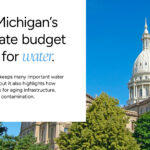
Before heading into the early July summer recess, the Michigan Legislature approved a balanced, bipartisan budget for the upcoming 2027 fiscal year. When it comes to water policy, there aren’t many surprises. In many ways, this is a status quo budget — it avoids some of the deep environmental cuts that had been proposed earlier… Read more »
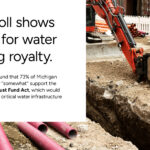
A new poll from Progress Michigan in partnership with Public Policy Polling shows strong support for the Michigan Water Trust Fund Act, a package of two bills long championed by Flow and introduced by Sen. Sam Singh (D-28) in May 2026. The bills (SB 950 & 951) would raise approximately $300 million annually by imposing a 25-cent… Read more »