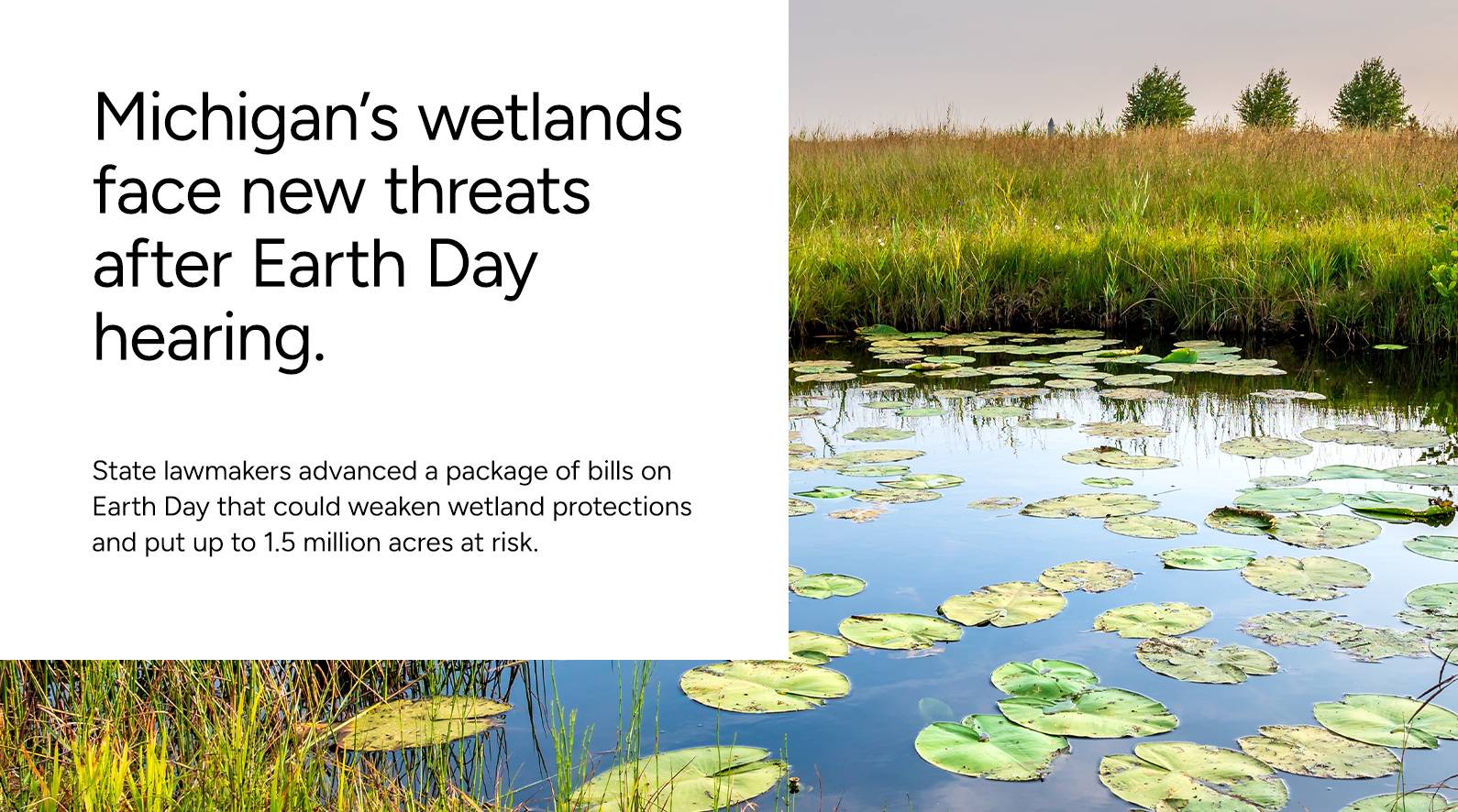
On Earth Day — a time meant to focus on protecting our water and natural resources—the House Natural Resources and Tourism Committee held a hearing on a package of wetland bills, including HB 5501, 5502, 5536, 5556, and 5082. Instead of strengthening protections, these bills would weaken safeguards that have been in place for decades. Just as concerning as the bills was the process: there was limited opportunity for public testimony, and the bills were voted out of committee the following week without further input. For something this important, Michiganders deserved more transparency and time to be heard.
Wetlands are not just “empty land.” Michigan has already lost more than half of its wetlands, and the ones that remain do important work. They filter pollution, reduce flooding, recharge groundwater, and support wildlife. These benefits are especially important as we see more extreme weather and flooding across the state, as we did in April 2026.
The biggest concern is HB 5536. House Bill 5536 would change Michigan’s long-standing wetland definition to a narrower federal standard from the Sackett v. EPA decision. On paper, that might sound like a small technical change. But in reality, it would functionally remove protections for a large number of wetlands — especially those connected through groundwater or seasonal flow rather than a visible, permanent surface water connection. Experts estimate that between 1 and 1.5 million acres could lose legal protection.
The other bills add to the problem.
- HB 5502 would remove protections from many wetlands simply because they were originally created by human activity, even though they now function like natural wetlands.
- HB 5501 pushes mitigation methods that often fail and limit local control.
- HB 5556 allows “temporary” fixes instead of long-term solutions, which could lead to a net loss of wetlands over time.
- HB 5082, while focused on wetland identification, imposes requirements without funding, which could make it harder—not easier—for the state to identify and protect wetlands properly.
Taken together, this package weakens long-standing protections, creates confusion, and moves Michigan away from a system that has worked for decades. Put simply, fewer wetlands would be protected. And when wetlands lose protection, they can be filled or damaged without being replaced. That means more flooding, more pollution, and fewer natural protections for communities.
At the hearing, there was also strong public opposition. People from across the state spoke up to say wetlands matter—for clean water, for flood protection, and for the places they live. Many urged lawmakers not to roll back protections that have been in place for decades.
Michigan’s wetlands are a shared resource, and decisions about them affect all of us. Moving bills like this forward quickly, with limited public input—especially on Earth Day—sends the wrong message. We can and should do better to protect these resources and make sure the public has a real voice in decisions that affect them. Wetlands are held in public trust, and these bills fall short of the state’s duty to protect them.
