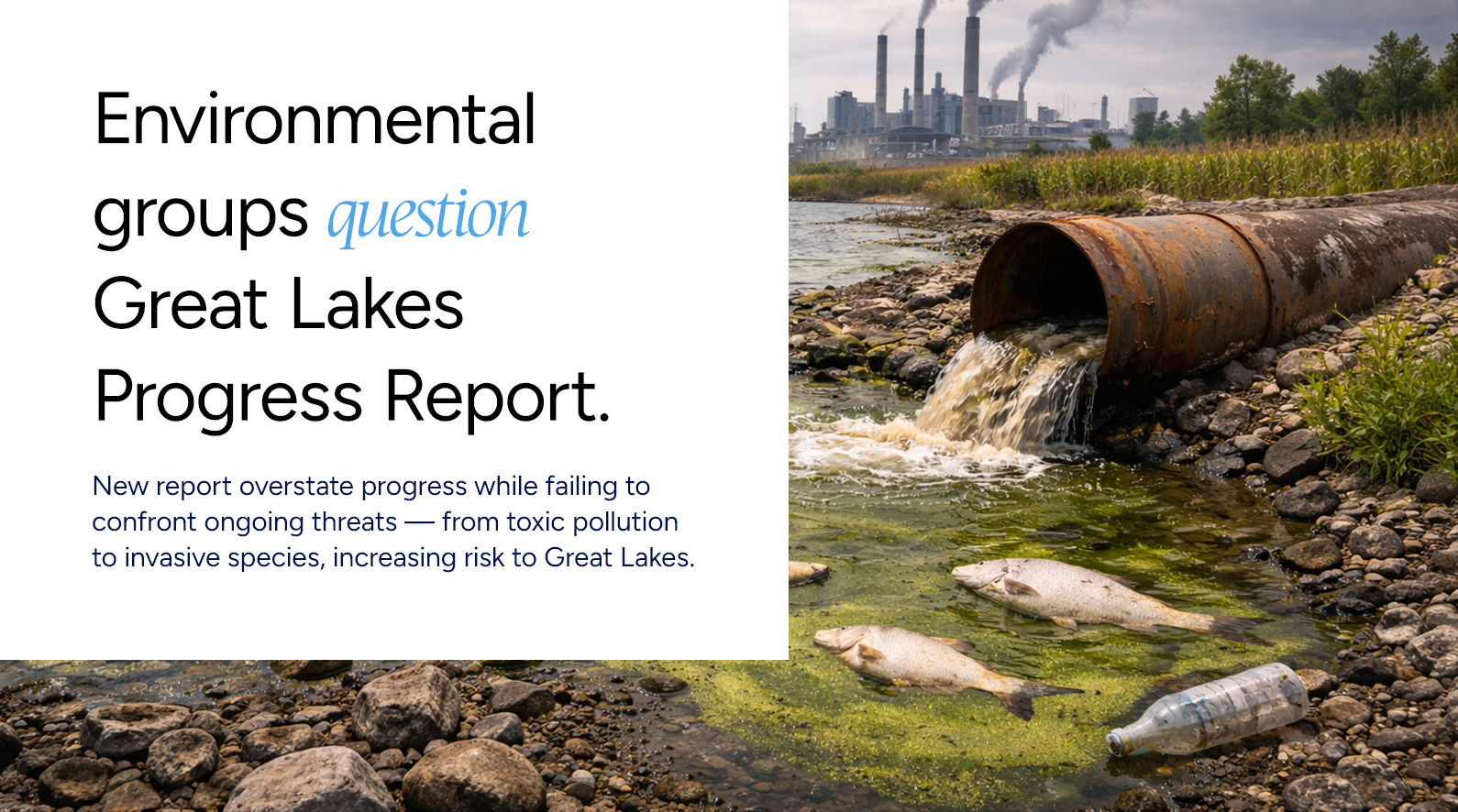
Environmental groups are criticizing new Great Lakes progress reports published by the Canadian and US governments for failing to confront serious ecological problems, and for a weak commitment to the Great Lakes agreement that requires the reporting.
The two reports, one on the state of the Great Lakes and the other on efforts by the governments to restore the Great Lakes, are required to be produced every three years. The Canadian and US governments signed the most recent version of the pact that calls for the reports, the Great Lakes Water Quality Agreement, in 2012.
First signed by Premier Pierre Trudeau and President Richard Nixon in 1972, the Agreement was once considered a global model for international coordination to restore degraded aquatic ecosystems.
Jane Elder, a longtime Sierra Club Great Lakes advocate, told an International Joint Commission listening session that the US and Canadian governments “seem to have walked away from the Great Lakes Water Quality Agreement as a shared vision for transboundary goals and cooperation on strategies to restore, protect and prevent future harm to the Great Lakes and the life they support.” She called the analyses in the two reports “shallow and incomplete.”
John Jackson, a Canadian advocate and champion for the Great Lakes, faulted the governments for failing to prevent threats to the Lakes. The onslaught of aquatic invasive species like the quagga mussel (which is largely responsible for crashing Great Lakes whitefish populations) could have been prevented, he said. The same failure undermines the protection of the Lakes from chemical contamination.
Under Annex 3 of the Agreement, Jackson said, “all [the governments] do is simply repeat the things they’re already doing. They don’t make new commitments…and they’re not even working closely together. We have to really stand up strongly and tell people that this is not acceptable. Prevention is what we simply have to do.”
In announcing the reports, the two federal governments cited “tremendous progress to restore and protect the Great Lakes, including the reduction of toxic chemicals, and a reduction in the establishment of new non-native aquatic species. Some indicators demonstrate that there are still significant challenges, including the impacts of nutrients, especially in Lake Erie and localized areas of the other Great Lakes, and the impacts of invasive species.”
A group of advocates working under the banner of the Great Lakes Ecoregion Network (GLEN) offered critical comments at a listening session hosted by the International Joint Commission, which under the Agreement, issues a triennial, independent report on progress in restoring the Great Lakes. The next IJC report will be published in 2027.
The 2025 State of the Great Lakes report:
The report includes:
- Describes the overall condition of all five lakes as “fair and unchanging”
- Assesses excess nutrients (primarily from agricultural fertilizer and animal waste) in Lake Erie and some bays as “unacceptable,” leading to toxic cyanobacteria and algae blooms
- Notes problems with some toxic chemicals in fish, beach closures and aquatic invasive species
- Describes the state of Lake Superior as good, Lakes Michigan, Huron and Ontario as fair, and Lake Erie as poor
The 2025 report on Great Lakes actions by the governments:
- Says two Great Lakes pollution hotspots have been remedied and removed from a list of areas of concern, while another 16 are “on the path toward eventual delisting”
- Says Canada and the U.S. are “actively reducing the release of chemicals” but does not address concerns that the process for identifying chemicals is long and cumbersome
- Cites workshops and webinars as actions to address climate change but no specific actions under the Agreement to reduce climate change causes and impacts
