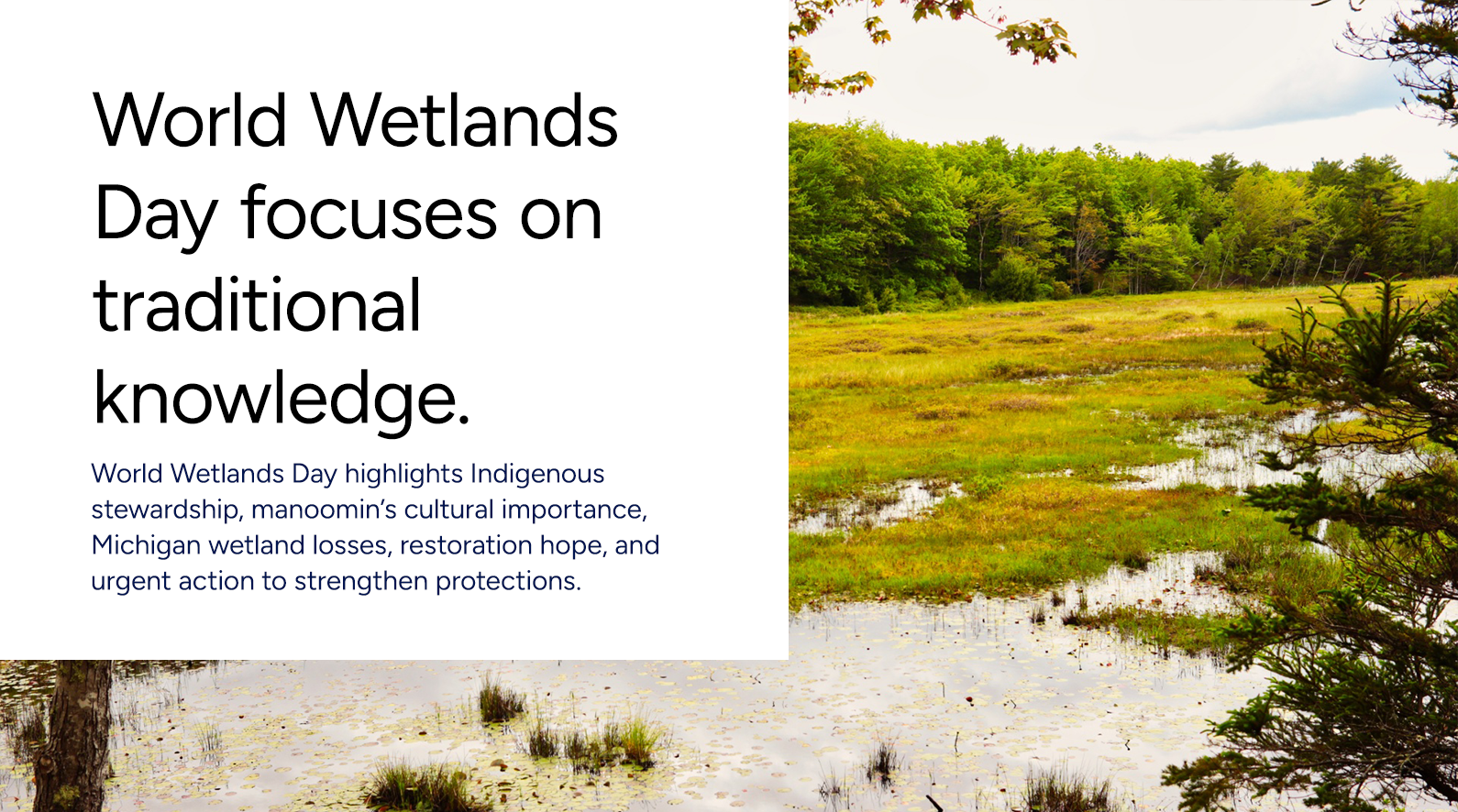
The role of indigenous cultures in sustainably living in relationship with wetlands is the theme of World Wetlands Day, February 2. In Michigan and the Great Lakes watershed, the theme has special relevance.
For countless generations, the indigenous peoples of what is now called the State of Michigan have been sustained by – and have worked to sustain – wild rice, or manoomin. Manoomin grows on water, and relies on wetland habitat. This cultural keystone endures today despite the loss of more than 30 percent of Michigan’s wetland acreage since European settlers arrived.
The dramatic loss of wetlands to drainage for agriculture, filling for construction, and other development caused many casualties. Because wetlands have many ecological values – they filter pollutants, lower flood waters through storage, and provide valuable habitat – their loss has reduced Michigan’s quality of life.
Today, there are hopeful signs. Governor Whitmer signed into law a measure designating manoomin as “the official native grain of this state.” The law adds, “Let it be known that manoomin is a sacred and important component to many wetlands and has a cultural significance to indigenous people of this state.”
Although Michigan law provides stronger protections for wetlands than federal law, the proposed weakening of wetlands rules by the Trump Administration puts additional pressure on these critical resources. Blocking the rule change and enforcing and strengthening Michigan’s wetland protection are crucial to showing that we, too, can live sustainably in relation to wetlands.
