January 28, 2026
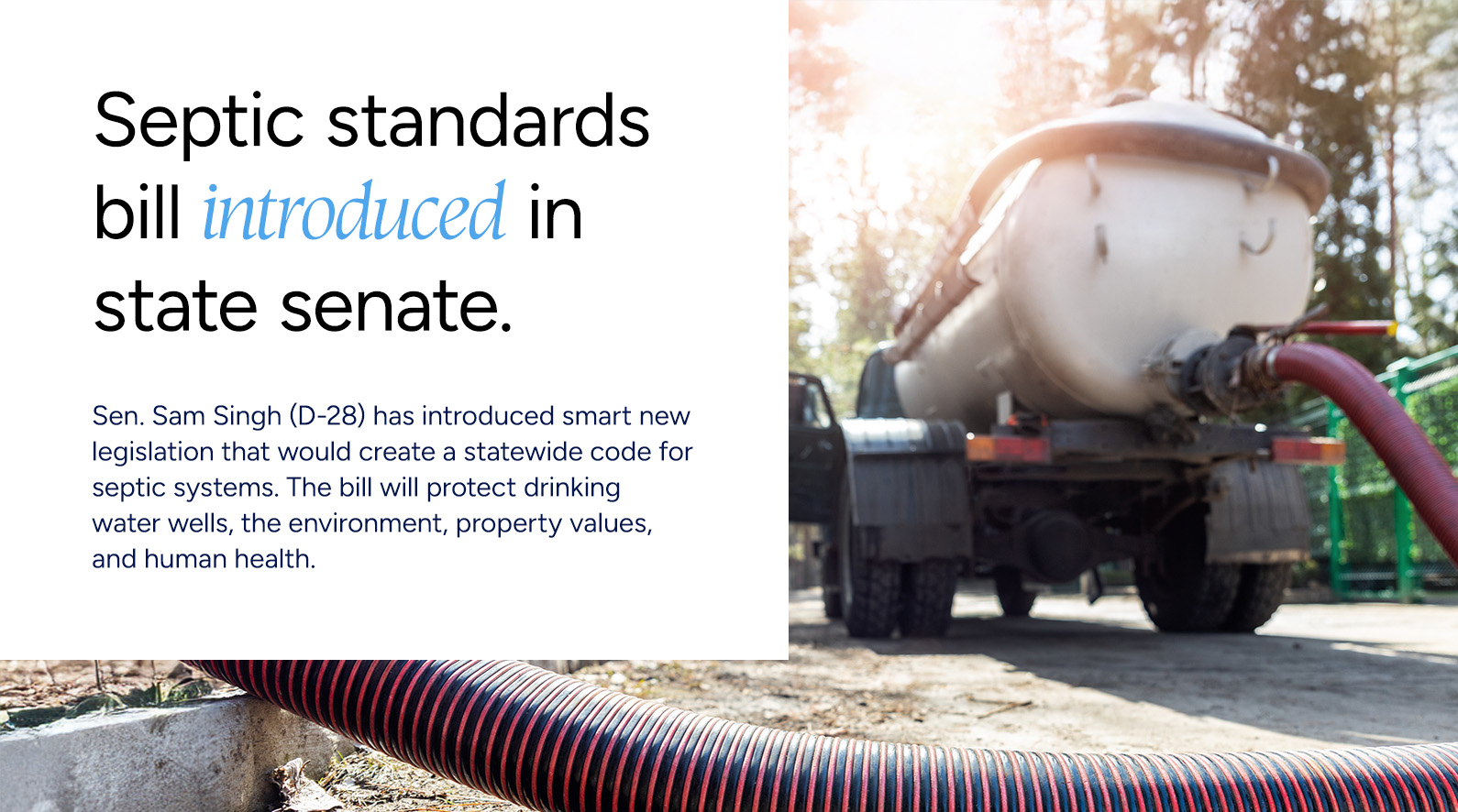
Lansing, Mich. – Today in the Michigan Senate, Sen. Sam Singh (D-28) introduced legislation to establish the state’s first-ever comprehensive framework for the oversight and maintenance of onsite wastewater treatment systems, also known as septic systems. The legislation (SB 771) will modernize Michigan’s outdated approach to septic system oversight, and protect the health of communities and the state’s lakes, rivers, and groundwater.
Live webinar: The case for a statewide septic code in Michigan
Join us on March 6 at 12:30pm for a live webinar with Sen. Sam Singh and a panel of experts, as we discuss the new legislation and answer your questions.
Michigan is the only state in the nation without a statewide sanitary code for septic systems, despite widespread evidence that failing and aging systems contribute to bacterial and nutrient contamination in drinking water wells and surface waters. The legislation recognizes that while properly functioning septic systems are an effective and affordable wastewater solution, septic system failures pose serious risks to public health, safety, and the environment.
Michigan has attempted to pass a statewide septic code over a dozen times and counting over the past decades, but previous efforts have repeatedly stalled in the legislature. The new bill requires the Department of Environment, Great Lakes, and Energy (EGLE) to develop a Statewide Sewage Code within three years, creating uniform performance-based standards for both conventional and alternative septic systems. If the legislation is passed and signed into law, Michigan will have consistent, enforceable protections to prevent failing systems from contaminating groundwater and surface waters — a critical step forward for public health and water quality.
Key provisions of the bill include:
- Homeowners with high-risk or older systems (20+ years and within 500 feet from any surface water or within a high-risk erosion area, critical dune, or 100-year floodplain) are evaluated first, followed by routine 10-year inspections and checks before any change or increase in use.
- The bill defines a septic system “failure” and authorizes local health departments to inspect, evaluate, and enforce compliance.
- The law establishes a Technical Advisory Committee: a group of highly qualified experts — including local health officials, engineers, soil scientists, and environmental organizations — that will guide EGLE in developing rules and performance standards.
- A new Onsite Wastewater Treatment System Administration Fund, which will provide grants to local health departments, support digitization of septic records, fund public education campaigns, and assist low-income homeowners with inspection and repair costs.
- The legislation allows the use of approved alternative and innovative treatment technologies to meet state standards, ensuring flexibility for communities and property owners.
To ensure compliance, the bill includes civil fines, liens for chronic noncompliance, and criminal penalties for falsifying reports or conducting unregistered evaluations.
“It is high time for Michigan to adopt a uniform septic code,” said Liz Kirkwood, Flow Water Advocates executive director. “Failing and aging systems threaten drinking water and our lakes and rivers. This legislation establishes common-sense protections that every Michigander can support — because clean water is not optional, it’s essential for our health and communities.”
Flow applauds Sen. Singh for his leadership in addressing one of Michigan’s most persistent and under-regulated sources of water pollution. The legislation builds on years of collaboration among environmental organizations, local health departments, and clean water advocates to create a fair, science-based approach to septic management that works for both rural and urban communities.
“Clean water begins at home,” Kirkwood added. “With this legislation, Michigan finally recognizes that protecting our water means maintaining the systems that return it to the ground.”
###
Flow Water Advocates is an independent 501(c)(3) nonprofit organization based in Traverse City, Michigan. Our mission is to ensure the waters of the Great Lakes Basin are healthy, public, and protected for all. With a staff of legal and policy experts, communicators, and community builders, Flow is a trusted resource for Great Lakes advocates. We help communities, businesses, agencies, and governments make informed policy decisions and protect public trust rights to water. Learn more at www.FlowWaterAdvocates.org.
