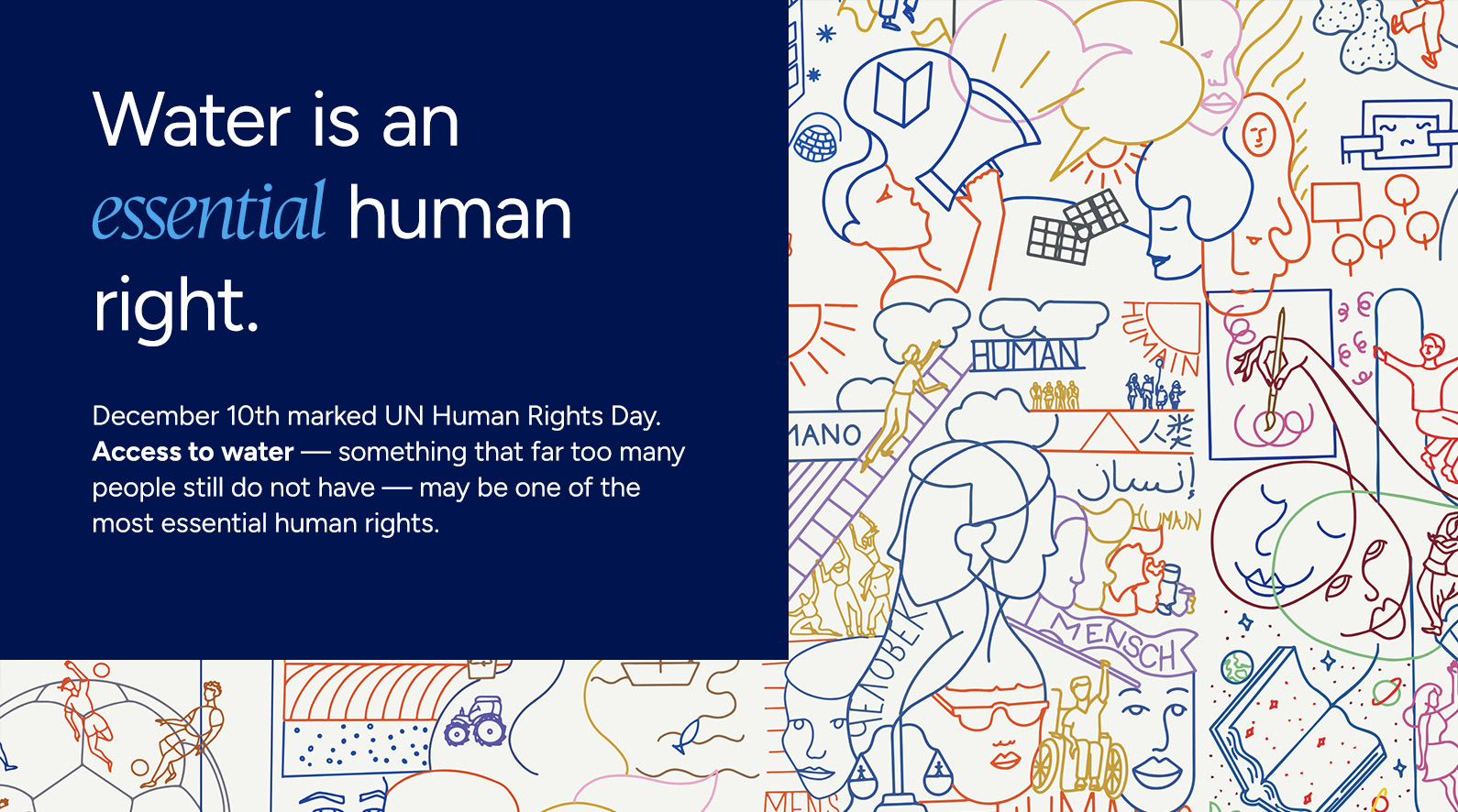
This month, people across the globe celebrated Human Rights Day. Every year on December 10th, the world celebrates the anniversary of “one of the world’s most groundbreaking global pledges: the Universal Declaration of Human Rights [UDHR].” The UDHR was proclaimed by the United Nations General Assembly in 1948, over 75 years ago, as a result of World War II. In response to global calls to “never again allow atrocities like those of that conflict to happen again,” world leaders created the UDHR as an international bill of rights. Drafted by the 18 member Commission on Human Rights, which was chaired by Eleanor Roosevelt, the entire text took less than two years to compose, despite the challenge of finding common ground at the global stage. The Declaration is composed of 30 articles, which lay out human rights that world leaders believed everyone was entitled to. Since its inception, the Declaration has been recognized as having inspired more than 70 human rights treaties.
This year’s theme is titled “Human Rights, Our Everyday Essentials.” This theme is meant to remind us of how human rights shape our lives, in many ways that we may not even notice or that we otherwise take for granted. Access to water — something that far too many people still do not have — may be one of the most essential human rights. According to reporting on sustainable development goals, “in 2024 2.1 billion people were without safely managed drinking water.” That is nearly double the population of China. While it appears that access to water is improving, it is not enough to reach global goals. Water pollution, water scarcity, and water-related disasters are proven to have a disproportionate effect on vulnerable and marginalized groups. Increasingly, recognition of the interconnectedness of water availability on education, health, disease risk, and ability to work, has raised that alarm that water will be key to reducing inequalities and ensuring health and dignity of all peoples.
On July 28, 2010, the UN General Assembly adopted a resolution recognizing water as a human right. The UN went so far as “acknowledging the importance of equitable access to safe and clean drinking water and sanitation as an integral component of the realization of all human rights.”
Only a few years later, on January 1, 2016, the UN Sustainable Development Goals came into force. Goal 6 focuses on clean water and sanitation, ensuring the availability and sustainable management of water and sanitation for all. Almost 10 years later, there has been very little progress in making this goal a reality. Billions of people still lack access to drinking water, water use efficiency remains low across the world, and water resources management is advancing very slowly.
Here in the Great Lakes Region, our water faces unique risks. Home to about 21% of the planet’s supply of surface fresh water, we have a unique duty to protect our water resources for generations to come. But our water is under a number of threats, including Line 5, animal waste pollution from Concentrated Animal Feeding Operations (CAFOs), and the ever growing presence of thirsty data centers, just to name a few. Thankfully, we have legal tools to protect it and prevent future harm, namely, the public trust doctrine. The public trust is at the core of Flow’s mission. It holds that certain natural resources (like our Great Lakes) are preserved in perpetuity for the benefit of the public to use and enjoy. Basically, the state is responsible for keeping our public trust resources for the benefit of current and future generations, underscoring the idea that water is a human right for everyone. Any proposed use, diversion, or discharge cannot harm the waters of the Great Lakes, nor can the water be controlled by or transferred to private interests for private purposes or gain. Our waters are an essential human right which must be protected from now into the future, and here in Michigan, the public trust is a key part of that fight.
In recognition of this month’s Human Rights Day, we’re taking a moment to be thankful for our Great Lakes water and the work that our collaborators, allies, and friends are doing to protect it. And we invite you to reflect on how water impacts your everyday life, and how your life would be different without access to clean, safe, affordable water.
