The Clean Water Act (CWA) was enacted in 1972, with the objective of “restor[ing] and maintain[ing] the chemical, physical, and biological integrity of the Nation’s waters.”1 The CWA’s core purpose is to protect fish, other wildlife, and water recreation.2 It also helps protect human drinking water by regulating pollution in source waters like lakes, rivers, and streams. Over the past 50-plus years, the CWA has fundamentally transformed water quality in the U.S. by reducing industrial and sewage pollution, expanding wastewater treatment, and protecting wetlands.
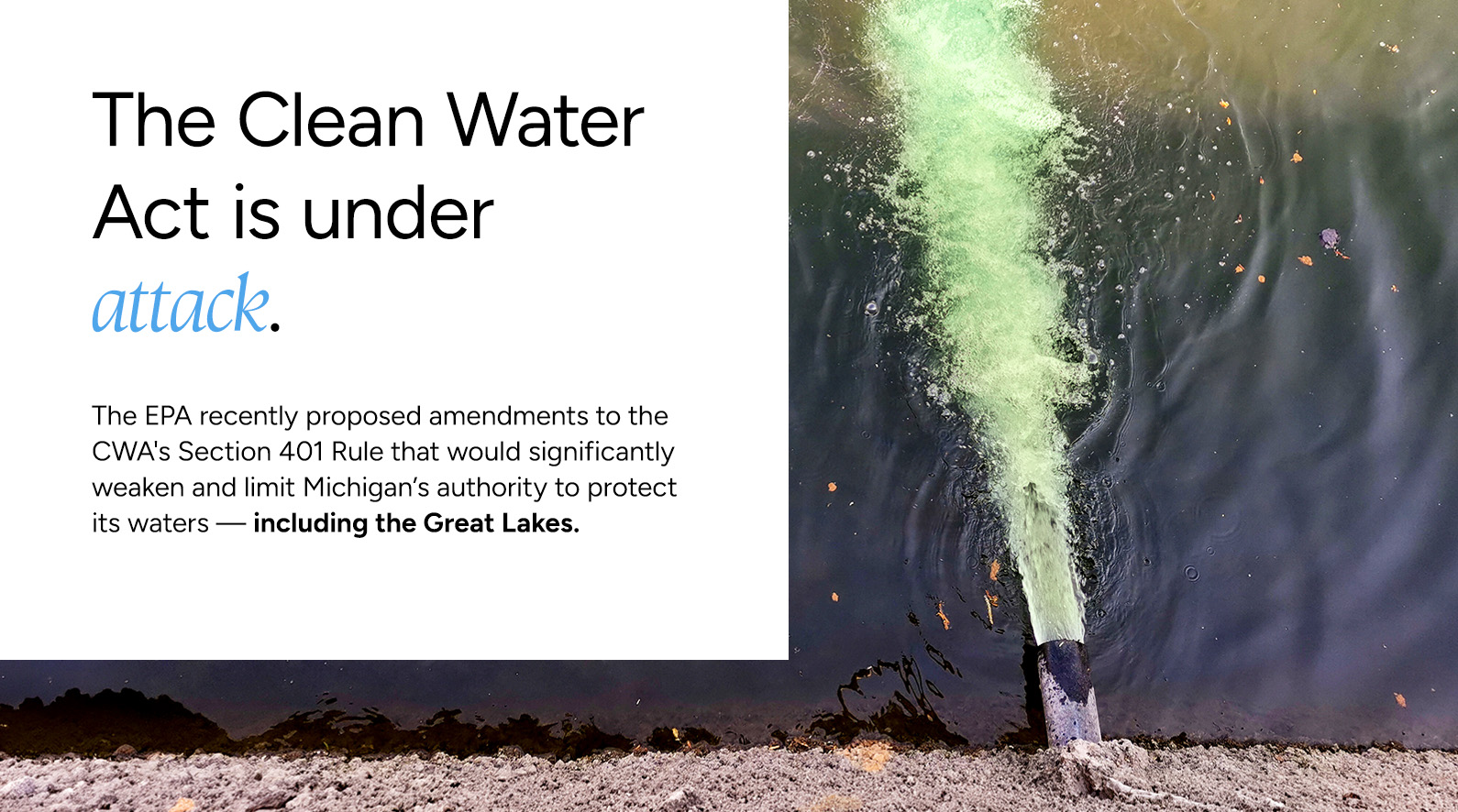
However, a critical provision of the CWA is now under attack. In early 2026, the EPA proposed amendments to the CWA’s Section 401 Rule that would dramatically reduce Michigan’s (and other states’ and tribes’) role in protecting its waters — including the Great Lakes. The proposed revisions would significantly limit state and tribal authority to protect water — authority that Congress plainly intended the states to retain.3
Currently, Section 401 provides states and Tribes with tools to collaborate with federal agencies to protect the waters within their borders.4 Under Section 401, a federal agency cannot issue a permit or license to discharge into waters unless Section 401 certification is issued by the relevant state and/or Tribe.5
The proposed revisions attempt to do the following:
- Narrow the scope of the certifying authorities (state or Tribe) analysis and review from “activity” to point source discharge
- Prevent states and Tribes from adding additional elements to certification
- Removes automatic extensions for certain situations
- Defines the contents of certification decisions for all authorities (both states and Tribes),
- Requires states and Tribes to get permission from the Federal agency and the applicant to modify grants of certification,
- Removes text that allows Tribes to administer the program instead of the EPA (called Treatment as a State or TAS), among other changes.6
Highlighted in a comment letter (PDF) by a multistate coalition of 18 attorneys general opposing the amendments, the proposed rule “upends the very role given to states to protect their own waters.”7 Flow Water Advocates, alongside the Clean Water for All Coalition, signed on to comments in opposition to the EPA’s proposed rule, which states in part:
“The proposed rule will lead to more water pollution, more destruction of critical aquatic resources, more risk of flooding and other disasters, more threats to drinking water and public health, the loss of habitat, deprivation of recreational and other opportunities, and other negative consequences for our waters and the people – which is all of us – that rely on them.”
The EPA intends to finalize the rule by the spring of 2026.
References
1. Clean Water Act, 33 USCS § 1251.
2. Id.
3. 33 USC § 1251(b).
4. Overview of CWA Section 401 Certification, EPA, https://www.epa.gov/cwa-401/overview-cwa-section-401-certification.
5. 33 USC § 1341.
6. Updating the Section 401 Water Quality Certification Regulation, EPA-Office of Water, https://www.epa.gov/system/files/documents/2026-01/cwa401_proposed-rule_public-meeting-overview_jan2026_0.pdf.
7. Danny Wimmer, AG Nessel Condemns Trump Administration’s Proposal to Dismantle Water Quality Regulations and Curtail State Authority, Mich. Dept. of Attorney General (Feb. 24, 2026) https://www.michigan.gov/ag/news/press-releases/2026/02/24/ag-nessel-condemns-trump-administration.
